Neurodivergent minds deserve care that recognizes natural traits as differences, not defects—these neuro-affirming therapists for Black women are helping make that possible.

In a society built for neurotypical brains, differences such as a more direct communication style, mental exhaustion from small talk, or sensory sensitivities to light, sound, smell, and touch can be misconstrued as defects.
But neurodivergent Black women aren’t broken, incapable, or in need of being fixed.
You deserve a therapist who sees you—not someone they think you should be. A therapist who validates your experiences, reminds you your needs matter, and helps you see what it can look like to honor those needs.
But finding neuro-affirming therapists for Black women isn’t always easy.
That’s why the therapists listed below are worth highlighting. Their values and affirming language offer a glimpse into what this type of care can look like for neurodivergent Black women.
What is neuro-affirming care?
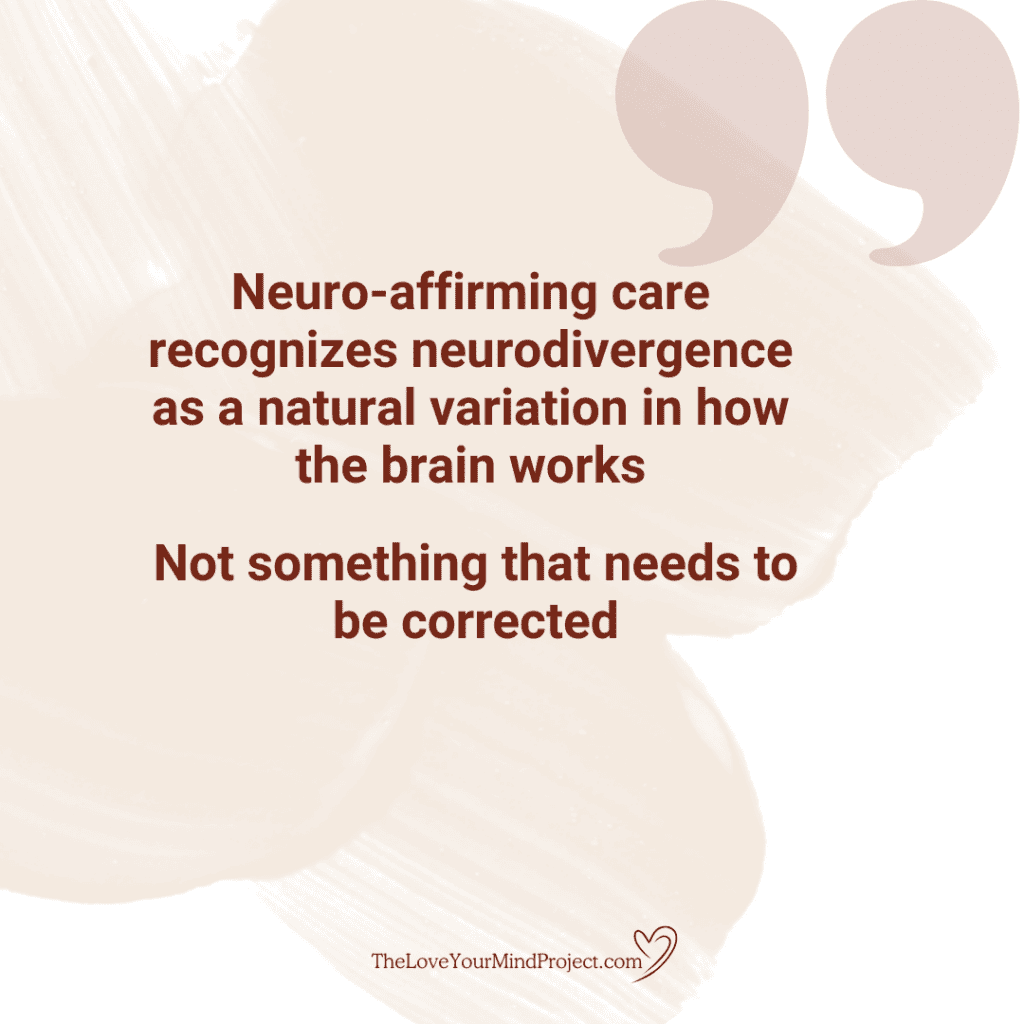
Neuro-affirming care recognizes neurodivergence—ADHD, autism, and other neurodevelopmental differences—as a natural variation in how the brain works, rather than something that needs to be corrected.
That means instead of being measured against a standard you were never meant to meet or mislabeled as aggressive, disorganized, or antisocial—you receive care that helps you better understand you.
When you receive care that treats you like the whole person you are, you learn where you thrive as well as where you may need more support in a world that doesn’t always accommodate you.
10 Black therapists supporting, not fixing, neurodivergent Black women
Beyond simply working with adults with ADHD, autism, or other forms of neurodivergence—these therapists describe their work using neuro-affirming language that recognizes neurodivergent minds as something to understand, not fix.
Shakera Hawkins, LMFT, ADHD-CCSP
Licensed marriage and family therapist, certified ADHD clinician
Divine Inclination
Georgia
Hawkins’ approach to ADHD focuses on helping her clients build emotional regulation, self-trust, and practical strategies for executive functioning challenges in everyday life. She emphasizes safety, reminding clients that they deserve peace and spaces where they can remove the mask and simply be themselves.
Learn more about Shakera Hawkins
Dr. Tanisha Clark, MEd, PhD
Licensed clinical psychologist, business consultant
Georgia
Dr. Clark works with high-performing neurodiverse adults who may appear successful on the outside while quietly navigating overwhelm and burnout.
Instead of expecting clients to fit traditional therapy approaches, she adapts to honor the unique ways neurodivergent minds process information and solve problems. Dr. Clark emphasizes care that helps them feel confident, heard, and supported—not “fixed.”
Her goal isn’t simply to help clients keep achieving—it’s to help them build practical, sustainable strategies so success doesn’t come at the expense of their well-being.
Learn more about Dr. Tanisha Clark
Jordan Gutierrez, LCSW, PMH-C
Licensed clinical social worker, certified perinatal mental health, postpartum support
Bloom In Color Therapy and Wellness
California, Florida
Gutierrez acknowledges that many neurodivergent women come to therapy exhausted from years of adapting to environments that weren’t built for them.
Her approach is to honor her clients’ neurotypes while working together to better understand the patterns their mind and body developed to survive.
Whether she’s working with women who are late-diagnosed, self-identified, or in the middle of an assessment, Gutierrez helps clients untangle years of being mislabeled, build support that works with the brain, not against them, and develop a relationship with themselves that doesn’t require constant self-monitoring.
Learn more about Jordan Gutierrez
Dr. Madrone Love, PsyD
Clinical psychologist
California
Dr. Love’s approach reflects a deep understanding of how neurodivergent minds work. She orients therapy toward how each client’s brain actually functions rather than how far they are from a standard that was never theirs.
She also works with partners and family members to help them better understand and navigate neurodiverse relationships, recognizing that neurodivergence doesn’t exist in isolation.
Learn more about Dr. Madrone Love
Dr. Charleen Wilder, PsyD
Licensed psychologist, clinical director
Upside Therapy & Evaluation Center
Texas
Dr. Wilder recognizes that autism doesn’t always look the way people expect it to. She takes this to heart as she evaluates girls and adults—two groups who often go misdiagnosed because of masking.
At Upside Therapy, Dr. Wilder is part of a therapeutic team that sees autism and other forms of neurodivergence as a way of being that deserves respect, curiosity, and space to thrive. Together, they help neurodivergent and LGBTQ children, teens, and adults feel understood, accepted, and safe in their own skin.
Learn more about Dr. Charleen Wilder
Cle’Tse Searle, LPC, CASDCS, ADHD-CCSP
Licensed professional counselor
Mind Your Therapy
Texas
Searle centers Black, LGBTQ, and other marginalized communities in their neurodivergent care. They work with children, teens, adults, and families navigating ADHD or autism, recognizing that culture and identity shape people’s mental health and how they seek support.
Their person-centered approach is grounded in compassion and acceptance, helping clients create meaningful change that extends beyond the therapy room.
Learn more about Cle’Tse Searle
Staci Hoover, LCSW
Licensed clinical social worker
Secure Self Care
New York, Florida, Vermont
Hoover recognizes that neurodivergence is often just one part of a person’s identity. Her affirming approach considers the ways chronic illness, sexuality, gender identity, and other lived experiences intersect, creating therapy that works with both the brain and the body—not against them.
She knows the cost of masking—how it can fracture an authentic sense of self—and helps clients build a stronger sense of confidence, connection, and wholeness.
Dr. Amber Thornton
Clinical psychologist
Washington, D.C., 40+ PSYPACT states
Dr. Thornton believes that understanding how your mind works can shape your healing, parenting, learning, and daily life. Through psychological evaluations, she helps clients find answers to concerns such as attention difficulties, trauma, OCD, and anxiety.
Her evaluations are grounded in family context, emotional patterns, and cultural humility—recognizing how race, identity, masking, and systemic factors can affect someone’s experiences. Dr. Thornton’s parent-first approach helps clients better understand themselves so they can show up more intentionally for themselves and the people they love.
Learn more about Dr. Amber Thornton
Patty Palmer, AFMT
Associate marriage and family therapist
Wander Psychotherapy
California
Patty Palmer creates a warm, compassionate space where clients can better understand themselves and develop greater self-awareness and compassion. She has a passion for supporting neurodivergent teens, couples, and families as they navigate neurodiversity together.
At Wander Psychotherapy, she’s part of a broader therapeutic team that challenges neuro-normative expectations while providing affirming, strength-based care that honors intersectionality and encourages self-advocacy.
Dr. Alicea Evans, PsyD, ADHD-CCSP, ASDCS
Neuropsychologist, ADHD certified clinical services provider, certified autism spectrum disorder clinical specialist
MindPath Assessments
California
Dr. Evans specializes in evaluations that help clients better understand their strengths, needs, and the way their minds work. Rather than simply providing a diagnosis for ADHD, autism, learning disorders, and other neurodevelopmental conditions, her assessments are designed to provide practical recommendations that empower clients and families with clarity and direction.
In addition to comprehensive assessments, she also provides evidence-based therapy, helping clients with anxiety, mood disorders, emotional regulation, and life transitions.
Learn more about Dr. Alicea Evans
How to find the neuro-affirming therapist for you
Finding a neuro-affirming therapist can take time, but it’s worth it to connect with someone who truly understands your experiences.
You can search therapist directories on sites like Melanin and Mental Health, Therapy for Black Girls, and Psychology Today—using filters such as ADHD, autism, race, gender, insurance, and more.
As you read their website or have that first conversation, pay attention to how they talk about neurodivergence. Does it sound like something they’re trying to fix?
The right therapist won’t expect you to become someone else. They’ll help you better understand who you are, including your strengths and challenges,
Neuro-affirming therapists for Black women: FAQs
How is neuro-affirming therapy different from regular therapy?
Neuro-affirming therapy may specialize in ADHD, autism, and other forms of neurodivergence, in addition to anxiety, depression, and other mental health conditions typically the focus of traditional therapy. More importantly, neuro-affirming therapy treats neurodivergence as a natural difference in the brain rather than a problem to fix.
How do you know if a therapist is neuro-affirming?
Look for therapists who specialize in neurodevelopmental differences, like ADHD or autism, but also use affirming language. They should focus on helping you grow in self-awareness, understanding, and acceptance—as well as become an advocate for your needs and the support or accommodations that can help lighten the cognitive load.
Do I need a formal diagnosis to see a neuro-affirming therapist?
No, many neuro-affirming therapists work with people who are self-identified, exploring the possibility of neurodivergence, or waiting for an evaluation. Whether or not you have a formal diagnosis, you deserve support that helps you better understand yourself and honors the way your brain naturally works.