
Headspace is a popular wellness app with over 1,000 meditations, courses, and other resources to help you manage and improve your mental health.
With millions of users globally,1 it’s understandable to wonder if this mainstream app can truly support our unique wellness needs.
As Black women, we can carry more than everyday stress. Cultural expectations to be strong, the pressure to put everyone else first, and experiences with bias and discrimination can take a toll on our mental health in ways mainstream wellness resources don’t always acknowledge.
We often have to be intentional with the type of support we look for. So this guide takes a closer look at Headspace and how it may or may not provide the support we need.
What is Headspace?
Headspace describes its app as an all-in-one mental health companion that helps you reduce stress and anxiety, improve your mood, focus more, and sleep better.
The app has a range of resources, including meditations, expert-led courses, sleepcasts, relaxation techniques, AI-powered support, coaching, and therapy. It incorporates science-backed methods, such as CBT for anxiety and depression and TIPP tools for stress management.
Headspace reports evidence-based outcomes for its members, such as more productive days, improvements in anxiety or depression symptoms, and less stress.1
How it works
Headspace offers several ways to care for your mental health, whether you want to build a simple mindfulness practice or get one-on-one support.
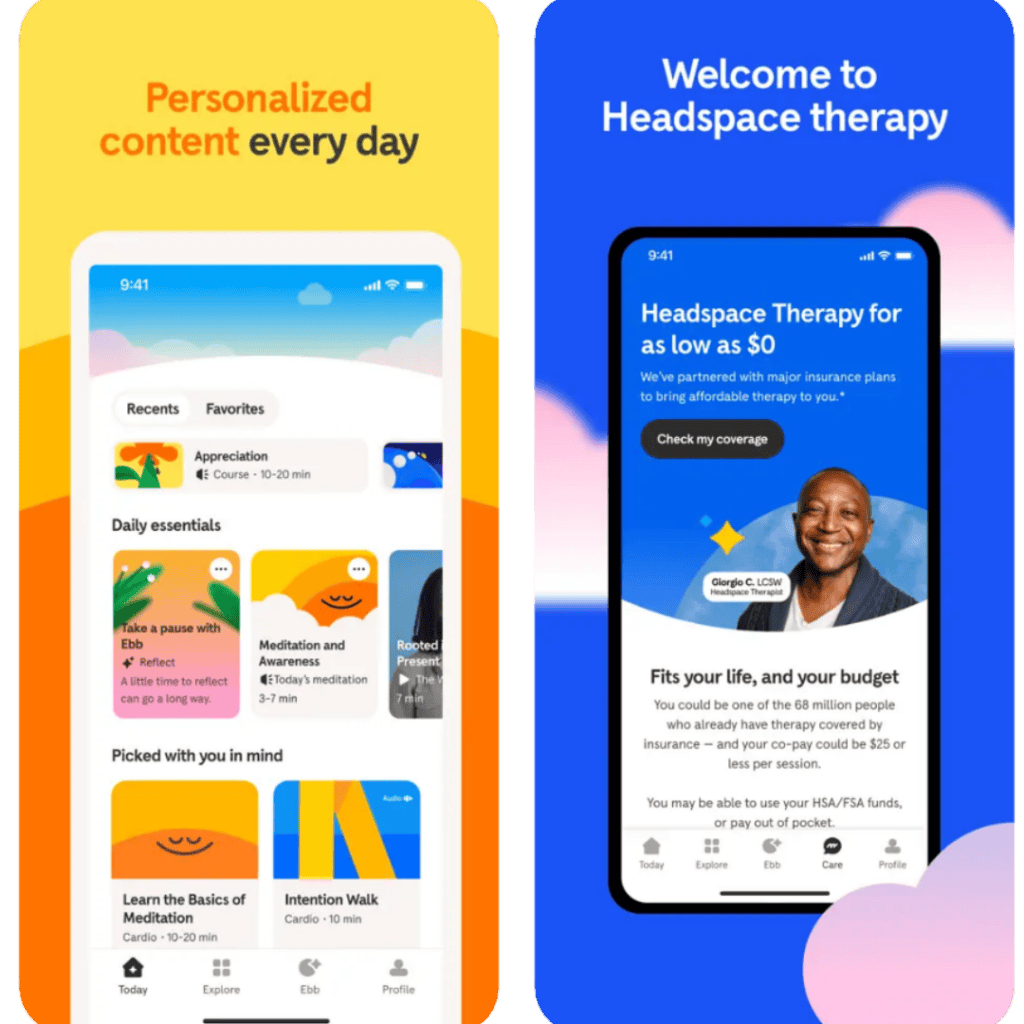
Source: Apple App Store | Headspace
Ease into meditation if you’re a beginner
If you’re new to meditation, Headspace has beginner courses that teach the basics, like paying attention to your breathing, focusing on one thing at a time, and simply noticing your thoughts instead of internalizing or acting on them.
You’ll also find courses that help build broader wellness skills, like mindful parenting, managing anxiety, and learning to truly rest.
Access a vast library for your unique experiences
Headspace has an extensive library for whatever you need in the moment, whether you’re looking for immediate stress relief, sleep resources, or activities to keep you focused and productive.
There are also collections for different identities. Celebrating Black Joy includes meditations centered on themes like redefining strength, recognizing your self-worth, and self-love—while Navigating Injustice offers support for grieving and processing the difficult emotions that can come with bias and inequality.
And there are resources for other experiences, like trauma, fertility journeys, relationships, and living with chronic conditions. The variety gives you room to choose support based on the season you’re in.
Personalize your support
You can make your Headspace experience your own. The app lets you save your favorite resources and easily revisit recent activities.
There’s also Ebb, Headspace’s AI companion. Speak to or text the AI chatbot for help pausing, reflecting, and processing difficult emotions. While it’s not a substitute for expert care, Ebb can take what you share and recommend relevant activities and resources within the app with privacy, safety, and security measures in place.
Get one-on-one support
Beyond access to self-guided tools and resources, Headspace offers one-on-one support through mental health coaching or online therapy.
Coaching can help you work toward specific wellness goals, like building healthier habits or navigating everyday challenges with guidance from a board-certified mental health coach. Currently, Headspace’s mental health coaching is text-only.
Therapy is conducted through video sessions with a licensed mental health professional and tends to focus on deeper patterns or mental health challenges, like anxiety, depression, stress, or grief. Headspace therapists also accept insurance.
Where Headspace stands out
Headspace balances the benefits of a mainstream app with resources relevant to different cultures, identities, and lived experiences.
That means you can choose from its vast library of meditations, courses, and sleepcasts, or reflect and process the day with your AI companion. You can even try online therapy or mental health coaching right in the app—all without feeling completely unseen as a Black woman.
The representation goes beyond Black people in stock photos. You can explore Headspace’s collections on topics and challenges that matter for Black women.
And it matters when a platform sees us—recognizing that sometimes our stress comes from the everyday systems we navigate. It makes the support that much more meaningful.
What to know before you sign up
Headspace requires a paid subscription to access its library. Currently, a monthly subscription costs $12.99/month and comes with a seven-day free trial. An annual subscription is $69.99/year and comes with a 14-day free trial.
There are also plans for students and families. Subscriptions automatically renew unless you cancel.
Your Headspace subscription doesn’t include mental health coaching or therapy. Those are add-ons charged separately.
Overall, Headspace may be a good fit if you prefer one app with a wealth of self-guided wellness tools but still want content that acknowledges your experiences as a Black woman. It can be especially helpful if you’re new to meditation, mindfulness, or other wellness practices.
Is Headspace worth it? FAQs
How much does Headspace cost?
Headspace currently costs $12.99 per month or $69.99 per year. The monthly plan comes with a seven-day free trial, while the annual plan includes a 14-day free trial. Mental health coaching and therapy cost extra.
Are there drawbacks to using Headspace?
Headspace doesn’t offer free content outside of the trial period, so you’ll eventually need a paid subscription. The expansive library can feel overwhelming if you’re just beginning your wellness journey or aren’t sure where to start. Lastly, although it has content for Black women, the app isn’t necessarily designed for us, like an app like Exhale.
Is Calm or Headspace better?
Both apps offer tools for meditation, mindfulness, stress, and sleep. Headspace has thoughtful meditations focused on different lived experiences, like injustice, trauma, and infertility. It also offers online therapy through the app. Calm emphasizes relaxation and sleep and is known for its celebrity- and expert-narrated sleep stories. Calm is currently a little more expensive, but both apps offer free trials so you can explore them and decide which is best for you.
References
Last accessed October 2026
- Headspace. (n.d.). About Headspace. https://www.headspace.com/about-us ↩︎

- Is Headspace worth it considering our unique needs? - October 8, 2026
- The Exhale app: Wellness support that actually centers Black women - October 2, 2026
- Feeling unlovable even in a relationship? Here’s what to do with that feeling - September 24, 2026