Therapy and counseling can help you navigate emotional challenges. Coaching often works better for broader, shorter-term wellness goals.

Whether you’re in a challenging season, feeling stuck emotionally, or setting goals for personal growth, mental health support can help.
But that can bring a lot of questions.
Like what type of support should you try—therapy, coaching, or counseling?
Is there even a difference?
What should you know before you decide?
This guide breaks down coaching vs. counseling vs. therapy, including how each works and which situations they may be best for, so you can choose the support that fits your needs.
What's in this article?
How therapy and counseling work
Therapy and counseling are often used interchangeably. Both involve working with a licensed professional to improve your mental wellness.
“Licensed counselors and therapists are both trained to assess, diagnose, and treat mental health conditions,” says Keisha Saunders-Waldron, licensed clinical mental health counselor, professor, and coach at Confidential Confessions Counseling Services. “We can go into the past when the past is driving the present, and we hold ethical and legal accountability that matters deeply when you’re in such a vulnerable place.”
While therapy and counseling are similar, there can be slight differences between the two.
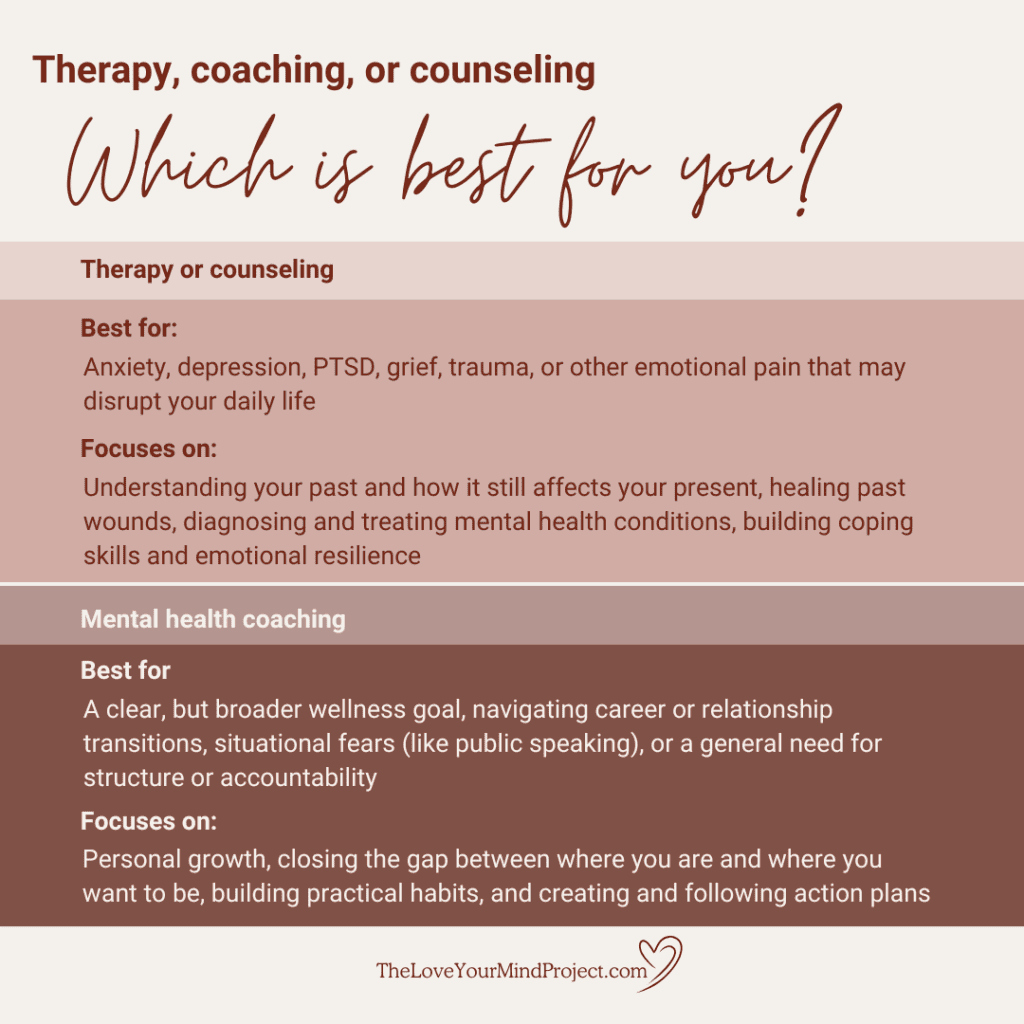
Counseling can sometimes be short-term and focused on immediate challenges, like grief, separation, or a major life transition. Therapy tends to dive deeper into long-standing emotional or behavioral patterns.1
That deeper understanding of your thoughts, self-narratives, and beliefs is part of what allows licensed therapists and counselors to help you navigate anxiety, depression, low self-worth, trauma, and other challenges that can make it difficult to get through the day.
How mental health coaching works
Mental health coaching focuses less on treating mental health conditions and more on helping you move toward a specific wellness goal.
“Coaching lives almost entirely in the future,” says Saunders-Waldron. “A coach helps you identify goals, build momentum, and close the gap between where you are and where you want to be.”
Rather than exploring past experiences, emotional wounds, or symptoms of anxiety or depression, a coach may help you:
- Navigate a career change
- Face situational fears like public speaking
- Create better work-life balance
- Strengthen key relationships
- Develop healthier habits, like eating, sleeping, or exercising
A coach can be incredibly valuable if what you need most is clarity and accountability. You can work together to identify obstacles, create action plans, and check in and adjust as needed.
The pros and cons of coaching, counseling, and therapy
One isn’t inherently better than the other. There are benefits and drawbacks to whichever type of support you choose. But understanding both can help you decide which option may best fit your needs.
Benefits of therapy and counseling
- Can help address debilitating symptoms of anxiety, depression, PTSD, grief, substance abuse, and other mental health conditions
- Helps you identify deeply held narratives and beliefs that make it difficult to see, accept, and love your whole self
- Led by licensed mental health professionals trained in handling sensitive topics, traumatic experiences, and heavy emotions
- May be covered by health insurance
Drawbacks of therapy and counseling
- Progress can take time, especially if working through deeper issues
- Sessions might bring up topics, experiences, and feelings that can feel uncomfortable at first
- May be expensive if seeing a therapist who doesn’t take insurance
- Costs can vary by the therapist’s or counselor’s location, credentials, or specialty
Benefits of mental health coaching
- May see quicker progress since coaching is more action- and goal-oriented
- Focuses more heavily on practical or tangible skills and accountability
- Coaches may be more accessible because there are fewer licensing and regulatory requirements governing where or how they practice
- Potentially more affordable than therapy if paying out of pocket
Drawbacks of mental health coaching
- The quality, methodologies, and ethics of coaching can vary widely across providers since it’s a less regulated industry
- Anyone can legally call themselves a coach, even without training or certification, making it harder to find a proven, trustworthy professional.
- Not usually recommended for anxiety, trauma, depression, or other mental health conditions that can significantly affect daily life
- Not typically covered by health insurance because it focuses on personal goals rather than treating a diagnosable mental health condition2
How to decide which type of support is right for you
If you’re unsure whether you should choose coaching, counseling, or therapy, ask yourself these questions.
What kind of support do you need most? Therapy is best if you need what experts call clinical work.
“If you’re navigating grief that has you unable to function, anxiety that disrupts your daily life, trauma, or you’re managing a diagnosis like depression or PTSD—that’s clinical work for a licensed professional,” explains Saunders-Waldron. “However, a skilled coach can be a wonderful investment if you need accountability around a specific life transition that you feel emotionally equipped to handle.”
Saunders-Waldron reminds clients that the right support depends on the root of the issue, not just the symptom. And that some of us may need a therapist first, then a coach later—or both simultaneously.
What are your goals? Therapy and counseling often focus on deeper emotional healing, while coaching tends to be more short-term and focused on self-improvement.
Do credentials matter to you? Saunders-Waldron explains how licensed therapists and counselors have met state-mandated education requirements, supervised hours, and examination standards. Coaches can have certifications, but they’re not required.
Have you considered the logistics? In addition to finding the right fit, think about factors like cost, insurance coverage, and provider availability to make sure it works for your situation.
Are you dodging stigma? Not everyone understands the benefits of therapy. But that stigma doesn’t have to stop you from getting the support you need.
“There’s no shame in needing clinical support,” encourages Saunders-Waldron. “The therapeutic relationship is one of the most powerful healing tools we have—don’t shortchange yourself out of it because you’re afraid of being labeled.”
Coaching, counseling, and therapy can all play valuable roles in improving your mental and emotional well-being. The decision isn’t about choosing which is better, but identifying what you need most in this season.
And what shouldn’t be overlooked is that you’re recognizing you deserve support. That awareness alone is a powerful first step.
Coaching vs. counseling vs. therapy: FAQs
What’s the difference between coaching, counseling, and therapy?
Both therapy and counseling from licensed professionals can treat and diagnose mental health challenges and help you heal from past trauma that still affects your life. Coaching generally helps you achieve broader wellness goals, rather than addressing a mental health condition, and it emphasizes action steps and accountability.
Can counselors provide therapy?
Yes, many licensed counselors offer therapy services. The terms counseling and therapy are often used interchangeably, though therapy can sometimes refer to more in-depth and long-term treatment of mental health conditions.
How do I know if I need therapy instead of coaching?
Therapy might be the better choice if you’re experiencing anxiety, depression, trauma, grief, overwhelming stress, or other emotional challenges that make your day-to-day difficult. Coaching may be more appropriate if you feel emotionally well but want support navigating a life transition, building new habits, or working toward specific personal or professional goals.
References
Last accessed June 2026
- https://www.facebook.com/konstantin.lukin.90. (2026, February 5). Lukin Center. Lukin Center for Psychotherapy. https://lukincenter.com/psychotherapy-vs-counseling/ ↩︎
- (2026). Zencare Guide. Blue Cross Blue Shield for Therapy https://zencare.co/health-insurance/blue-cross-blue-shield ↩︎

- Therapy, coaching, or counseling: Which is right for you? - June 4, 2026
- Why culturally-affirming care matters for our mental health - May 28, 2026
- Types of mental health support: Deciding which is best for you - May 21, 2026