Morning anxiety can stem from poor sleep, common triggers like work emails or news headlines, or chaotic mornings with little downtime. Sound familiar?

If you wake up and immediately feel dread or overwhelm as you think about your day, you’re not alone.
It could be morning anxiety—something incredibly common, especially for those of us who hold on to worries, fears, and pressures we weren’t designed to. And for Black women, that can sometimes feel like a rite of passage.
But morning anxiety isn’t just about having too much on your plate. It could be your body’s way of telling you it’s craving more balance—more intentional moments of peace and fewer triggers and stressors, especially first thing in the morning.
This article breaks down that unsettling question, “why do I feel anxious when I wake up?” by unpacking what morning anxiety is, what causes it, and how you can start your day with more calm, peace, and intention.
What is morning anxiety?
Morning anxiety is when you wake up already feeling stressed, worried, or emotionally unsettled, before anything has even happened. It’s not an official diagnosis, but it is a common experience—especially if you live with general anxiety, chronic stress, burnout, or sleep disruptions.1
What causes morning anxiety?
Our bodies naturally release cortisol, the built-in stress and wake-up hormone that helps us feel alert and ready for the day.2 But if you already experience high stress or anxiety, that normal rise in cortisol can feel like gasoline on a flame. Instead of waking up at ease, your nervous system jumps into high alert.
Signs and symptoms of morning anxiety
Morning anxiety can show up in different ways. You might notice3:
- Chest tightness
- Increased heart rate or shallow breathing
- Restlessness or feeling on edge
- A sense of dread about the day
- Irritability
- Overwhelm or emotional heaviness
- Racing thoughts
- Difficulty concentrating or feeling mentally scattered
These symptoms may come and go, or they can feel like your morning “baseline,” especially during stressful seasons.
Why morning anxiety can hit Black women so hard
We’re not immune to stress or anxiety. In fact, studies suggest Black women are more likely to experience chronic stress than other groups.4
- We face unique racial and gender stressors—like trauma, financial strain, work-related pressure, and discrimination—which can keep us in a constant state of survival.
- We’re less likely to receive the mental health care we need to heal, whether because of the stigma (afraid of being labeled as “crazy” or weak), mistrust of the healthcare system, or limited access to care.5
Morning anxiety may sound cute, but for many of us, it can wreck our whole day—leaving us feeling mentally strained and exhausted—before the day has even started.
Why do I feel anxious when I wake up? Common reasons
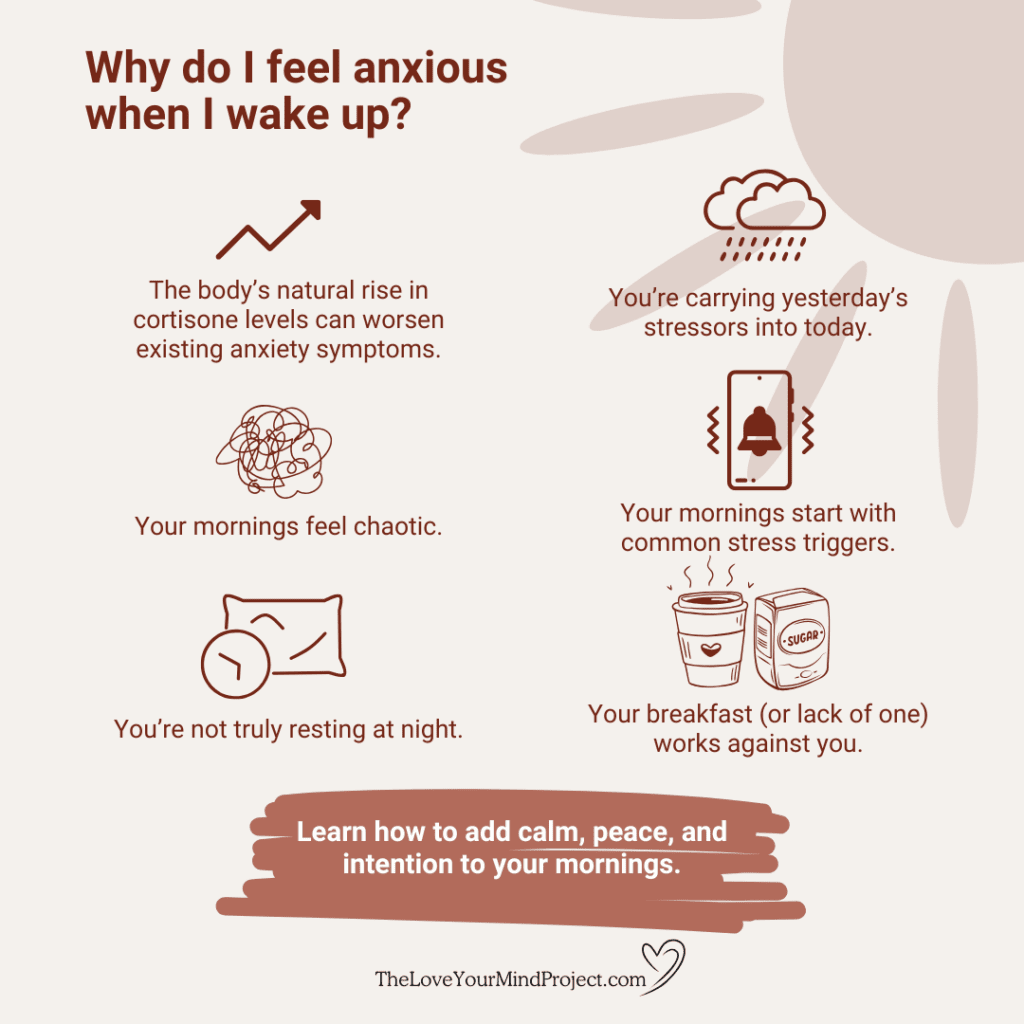
A lot can make that early-morning cortisol spike hit more intensely. Here are a few reasons you may feel anxious in the morning.
You’re carrying yesterday’s stress into today
An unfinished project, an uncomfortable conversation, or a mistake replaying in your mind can spill into the next morning. Instead of waking up with a fresh start to your day, you may already feel behind, stressed, and completely overwhelmed.
Your mornings feel chaotic
The brain doesn’t like chaos. When it doesn’t know what to expect, it prepares for danger.6 Waking up late, rushing to get the kids out the door, scrambling to find your keys—it can trigger a stress response. And when you’re in survival mode from the moment you wake up, even the smallest inconvenience can feel like a full-on threat.
Your mornings start with stress triggers
Checking work emails, scrolling social media, catching up on the news, and even diving straight into your responsibilities can overstimulate the brain and intensify anxiety in the morning.7 Peace can feel impossible when you’re in “go mode” from the moment you wake up.
You’re not truly resting at night
Sleep challenges due to frequent waking, chronic pain, or racing thoughts keeping you awake can stop your mind and body from getting the restorative sleep it needs. This can leave stress hormone levels elevated overnight8, causing you to wake up fatigued and anxious in the morning.
Your breakfast (or lack of one) works against you
Nutrients help regulate our mood and ability to function throughout the day. Caffeine can trigger a release of adrenaline—fueling sensations that mimic anxiety. And too much sugar causes blood sugar fluctuations that contribute to anxiety.9 Skipping breakfast entirely can also affect blood sugar levels and worsen symptoms.10
How to ease that anxious feeling when you wake up
We can’t remove every stressor from our lives, but we can build small habits that help calm our minds and ease morning anxiety.
- Prepare the night before, when possible: Doing little things the night before, like laying out clothes, prepping lunch, or writing down priorities for the next day, can slow down your mornings and maybe even create space for you to exhale.
- Start your day without the common stressors: Try to avoid major stimulators, like your socials, news, or email, when you first wake up. You can start small—like no phone for the first 30 minutes, to let your nervous system settle—and build from there.
- Build a calming morning routine: Choose an activity or two that relaxes you. A small cup of tea, a few deep breaths in the shower, or a couple of minutes sitting still can reset your mind when you experience morning anxiety.
- Make space to process what’s on your mind: Anxiety can be a sign of unresolved or unprocessed emotions. Take some time in the morning to name and release those heavy feelings through journaling, prayer, or meditation.
- Support your body, too: A breakfast that’s balanced with protein and fiber can keep your blood sugar and adrenaline in check. Stay hydrated. And if possible, a quick walk or workout in the morning can rebalance your system when you’re feeling particularly stressed.
- Remind yourself it comes and goes: Anxiety doesn’t mean you’re doing anything wrong. It’s a natural response to stress. When you feel these sensations in the mornings, don’t judge them. Acknowledge them and let them pass like a wave.
When to reach out for help
Morning anxiety can improve with lifestyle changes, but if it’s a sign of something deeper, like depression, trauma, stress, or burnout that’s gone unaddressed—it’s okay to find professional support.
Consider talking to a therapist or your primary care provider if:
- It’s hard to get out of bed.
- You constantly have trouble sleeping.
- Symptoms affect your work, relationships, or daily activities.
- You feel emotionally or mentally overwhelmed most mornings.
Therapy can help you identify the root of anxiety and give you the tools to have better mornings. If your symptoms are especially severe, your doctor may recommend anxiety medication. Just be sure to discuss your options, side effects, and medical history with your doctor first.
Morning anxiety FAQs
Why do I feel anxious when I wake up?
The body’s cortisol levels naturally rise in the morning to prepare us for the day. If you already deal with anxiety or chronic stress, this natural spike can worsen symptoms. Small habits, like immediately checking the news, staying up late the night before, or waking up late and rushing, can also intensify anxious feelings.
How do I stop feeling anxious when I wake up?
Try avoiding major stressors when you first wake up. Engage in a small activity that relaxes you, make space to process your feelings, and aim for a balanced breakfast to support your mind and body.
Is there treatment for morning anxiety?
Yes. Both therapy and medication (if needed) can help treat anxiety, in addition to adequate rest, nutrition, and exercise. Therapy, in particular, can help you address the underlying causes of anxiety, unhealthy thought patterns that fuel it, and how to manage it in healthy ways.
Can hormones make morning anxiety worse?
Yes, high cortisol levels can trigger and fuel anxiety—but also changes in estrogen, progesterone, testosterone, and thyroid hormones.
Is morning anxiety the same as panic attacks?
Not necessarily. Morning anxiety might cause general distress or dread. A panic attack is sudden, intense, and could come with chest pain, trembling, or shortness of breath. While morning anxiety can trigger a panic attack, the two aren’t the same.
References
Last accessed November 2025
- Clinic, C. (2023, November 29). 6 Ways To Feel Less Anxious in the Mornings. Cleveland Clinic. https://health.clevelandclinic.org/morning-anxiety ↩︎
- Clow, A., Hucklebridge, F., Stalder, T., Evans, P., & Thorn, L. (2010). The cortisol awakening response: More than a measure of HPA axis function. Neuroscience & Biobehavioral Reviews, 35(1), 97–103. https://doi.org/10.1016/j.neubiorev.2009.12.011 ↩︎
- Waking up with Anxiety for No Reason: What to Do. (2024, August 9). Pathlight Mood & Anxiety Center. https://www.pathlightbh.com/resources/waking-with-anxiety ↩︎
- Larysa Koziarivska. (2025, March 24). Alana Atchison. ABPP. https://abpp.org/newsletter-post/supporting-black-women-who-experience-chronic-stress/ ↩︎
- Woods-Giscombe, C., Robinson, M. N., Carthon, D., Devane-Johnson, S., & Corbie-Smith, G. (2016). Superwoman Schema, Stigma, Spirituality, and Culturally Sensitive Providers: Factors Influencing African American Women’s Use of Mental Health Services. Journal of Best Practices in Health Professions Diversity : Research, Education and Policy, 9(1), 1124. https://pmc.ncbi.nlm.nih.gov/articles/PMC7544187/ ↩︎
- How Uncertainty Causes Anxiety. (2023). Psychology Today. https://www.psychologytoday.com/us/blog/natured-nurture/202304/how-uncertainty-causes-anxiety ↩︎
- Clinic, C. (2020, June 2). Why Downtime Is Essential for Brain Health. Cleveland Clinic. https://health.clevelandclinic.org/why-downtime-is-essential-for-brain-health ↩︎
- Wright, K. P., Drake, A. L., Frey, D. J., Fleshner, M., Desouza, C. A., Gronfier, C., & Czeisler, C. A. (2015). Influence of sleep deprivation and circadian misalignment on cortisol, inflammatory markers, and cytokine balance. Brain Behavior and Immunity, 47, 24–34. https://doi.org/10.1016/j.bbi.2015.01.004 ↩︎
- What is Adrenaline? | Mental Health America. (2025, January 6). Mental Health America. https://mhanational.org/resources/what-is-adrenaline/ ↩︎
- Why do I have an increase in anxiety symptoms when I’m hungry? (2022, February 17). AnxietyCentre.com. https://www.anxietycentre.com/faq/anxiety-symptoms-when-hungry/ ↩︎

- How to be vulnerable in a relationship when opening up feels scary - September 17, 2026
- When only needing “me, myself, and I” leaves little room for love - September 11, 2026
- Everyone eventually leaves me: How fear of abandonment gets in the way of love - September 4, 2026