They’re not just for toxic friends—these boundaries can help nurture an emotionally supportive and balanced friendship.

The idea of setting boundaries with friends might seem strange.
It’s easier to see how they’re needed for toxic or unhealthy relationships that can wreak havoc on your mental health.
But even best friends need boundaries.
Boundaries aren’t a sign that something is wrong. They’re often what help keep the friendship healthy.
This article explains why friendship boundaries matter and which ones can help nurture healthy connections—without being rigid, restrictive, or guilt-inducing.
What are boundaries in friendships?
Friendship boundaries are the limits and expectations you set to protect your time, energy, and emotional well-being.
They’re not walls meant to create distance. Instead, they’re guidelines that help both people show up for each other in a respectful, sustainable way.
In unhealthy friendships, boundaries may need to be firm. For example, if you constantly feel drained or overwhelmed in a one-sided relationship, you may want to limit your time together.
But boundaries in healthy dynamics can work more like mutual agreements. Instead of focusing solely on restrictions, they help ensure both people’s needs are seen and met within the relationship.
Why friendship boundaries are important (even for best friends)
Closeness doesn’t cancel out the need for boundaries. Without them, even the best friendships can suffer.
For example, you might be used to giving a close friend 24/7 access to your life, dropping everything when they need help, or pushing through exhaustion to support them.
But that’s not sustainable.
Over time, a draining friendship can erode your well-being. And close relationships can become especially taxing if you tend to care for others at the expense of yourself.
When boundaries are missing or repeatedly ignored, it can leave you stressed, emotionally fatigued, or resentful of the friendship over time.1
Setting boundaries doesn’t threaten your connection—it can make a deeper one possible.
5 guilt-free friendship boundaries to discuss
Friendship boundaries don’t have to be a list of rules. Consider these talking points to help your closest relationships stay balanced and supportive.
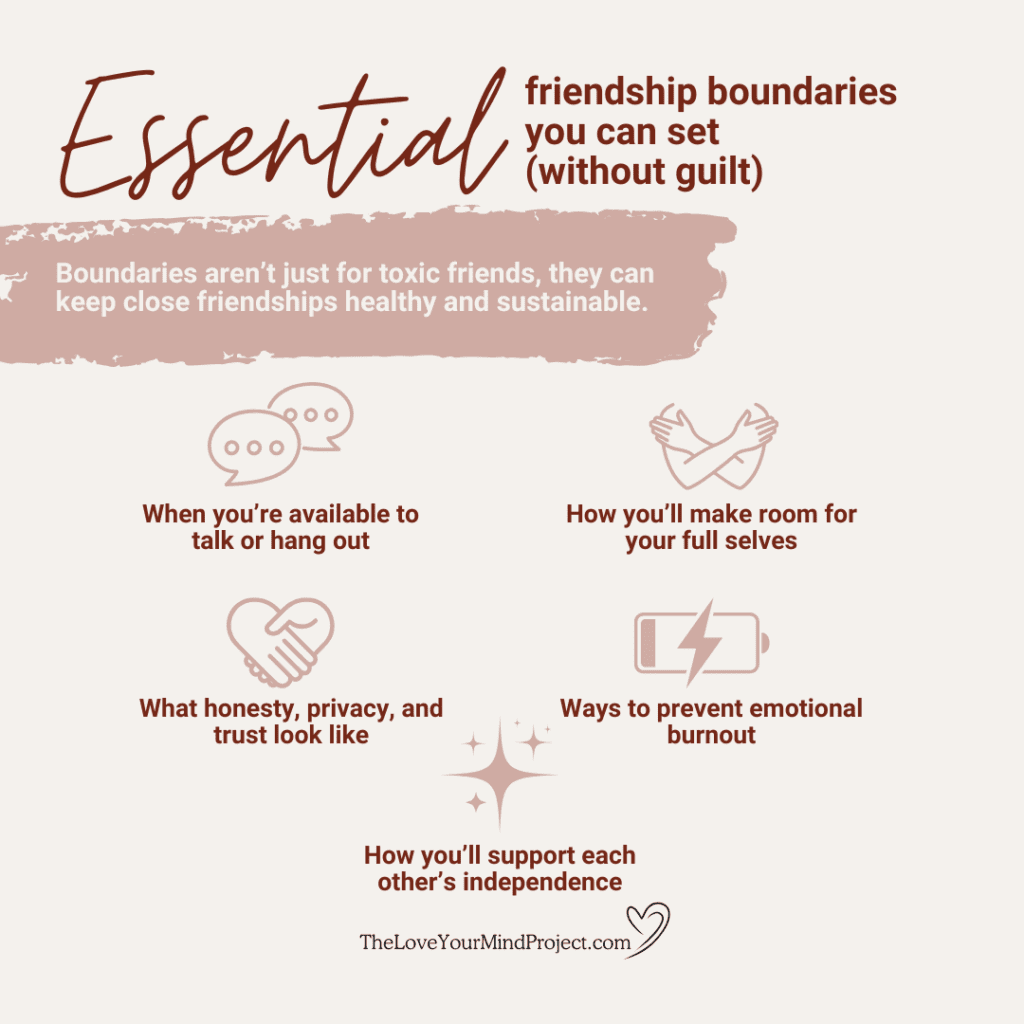

When you’re available to talk or hang out
You’re allowed to have limits on your time.
No one can be available all the time, and the pressure to be can add stress, anxiety, and overwhelm—especially when you’re already juggling so many responsibilities.
That means it’s okay if you can’t do late-night calls or texts, need notice before going out, or can’t respond right away during the workday.
Your friend may feel disappointed at times, but they should still be able to respect that your time, energy, and priorities matter too.

How to make room to be your full selves
Neither person should have to shrink, filter, or hide who they are in the friendship.
Talk about how you can create room for honest feelings, successes, struggles, interests, differing opinions, needs, and everything that makes you, you.
Naming these preferences can help you both feel seen, safe, and accepted for who you are.

What honesty, privacy, and trust look like
Trust is essential in friendships.
We often share vulnerabilities with friends that we don’t share with others, so it helps to discuss what trust looks like to each of you.
Be clear about what should stay between the two of you and what can be shared with others. You can also discuss how you’ll make room for honesty even when it feels uncomfortable.
And how will you handle disagreements? Some people need space before talking it out, while others prefer to address the tension in the moment.
Sharing these expectations can reduce misunderstandings and help you move through conflict more smoothly.

How to protect the friendship from emotional burnout
Support shouldn’t rest on one person.
Overgiving may seem loving, but if you’ve become the therapist, fixer, rescuer, or emotional container that holds it all, that imbalance in the friendship can exhaust you mentally and physically.2
Over time, you might feel more like a caregiver than a friend—left feeling empty, unsupported, and drained of patience, empathy, and peace.
Instead, talk through how you can keep the friendship emotionally balanced so that support is sustainable and flows both ways.

How you’ll ensure space for independence and recharge time
Even the closest friendships still need autonomy.
Personal space isn’t rejection, betrayal, or abandonment—it’s a healthy part of connection.
You should feel free to have other relationships, interests, alone time, and priorities outside the friendship.
Without that space, the dynamic can start to feel all-consuming or overwhelming.
So share what independence looks like for each of you in the friendship and what you can put in place to maintain it.
How to set friendship boundaries (without guilt)
Once you know what boundaries you need, it’s important to communicate them with your friend.
The conversation doesn’t have to be intense. You can keep it light, casual, and honest. Here are a few tips to keep in mind.
Choose the right time: Have a “boundaries talk” where you both come prepared to share. Or communicate them as they come up. Just make sure each person has the emotional capacity to listen.
Be clear and specific: Share examples of your experiences to help your friend understand your needs.
Make room for both voices: Give your friend time to process, respond, and share their own needs and experiences, keeping the boundaries mutually beneficial.
Give grace, but be consistent: Change can take time. Try to be patient as your friend adjusts, but still stick to the boundaries you agreed to.
It’s okay if the conversation feels awkward or uncomfortable. That doesn’t mean you did anything wrong or that the friendship is doomed. Give it time.
If you’re both genuinely working to honor and respect each other’s boundaries, you’re on a good path.
Friendship boundaries FAQs
Are boundaries important for best friends?
Yes, they are. Friendship boundaries can be especially important in a close dynamic because there’s more access, history, and emotional investment. Boundaries can help a close relationship remain close.
What are unhealthy boundaries in a friendship?
Unhealthy friendship boundaries may feel overly rigid, unclear, one-sided, or even controlling. Examples include only hanging out on their terms, demanding constant access, or using guilt when you try to protect your personal space.
How do you communicate boundaries to a close friend?
Aim for honesty, compassion, and clarity. Discussing boundaries is about strengthening the friendship, not criticizing or attacking each other. Focus on your experiences and needs, not their behaviors. And make space to understand their needs and experiences too.
References
Last accessed April 2026
- Verywell Mind. (2023, June 20). How to set boundaries with friends. https://www.verywellmind.com/how-to-set-boundaries-with-friends-7503205 ↩︎
- Cleveland Clinic. (2021, June 25). Empathy Fatigue: How Stress and Trauma Can Take a Toll on You. https://health.clevelandclinic.org/empathy-fatigue-how-stress-and-trauma-can-take-a-toll-on-you ↩︎