
Sometimes, it’s more than your energy that feels drained. You may feel tired all the time, impatient, low on empathy, and just emotionally tapped out.
We’re talking about being emotionally drained. And it can happen when your mental energy is depleted, such as from supporting others or pushing through responsibilities, while your own emotional needs go unmet.
If this is where you are, let’s explore what’s behind feeling emotionally drained, including why it happens and how you can begin nurturing your own needs—not just everyone else’s.
What does it mean to feel emotionally drained?
When you feel emotionally drained, it means your emotional reserves are running low. You may still function at a high level or show up for others, but inside you feel empty, stretched thin, and even a bit neglected.
Here are a few ways it can show up.
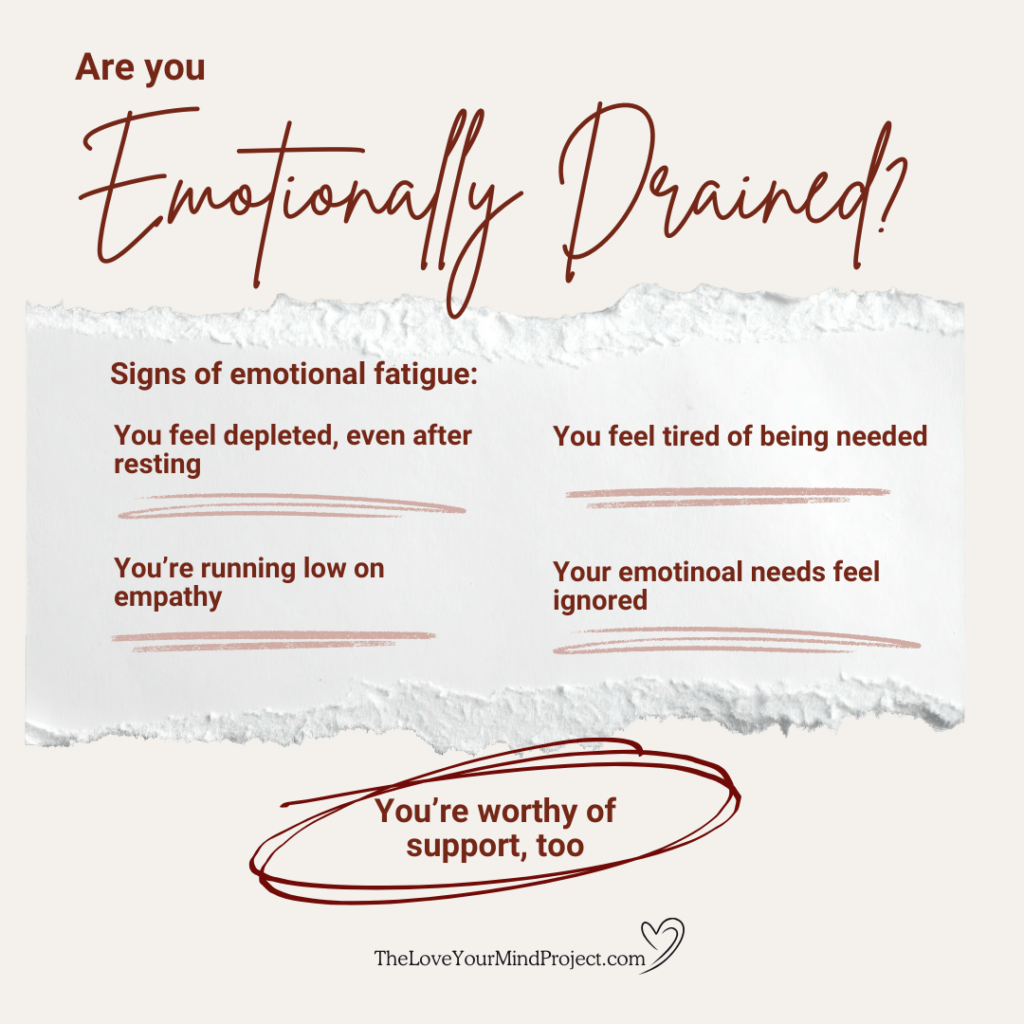
You feel depleted, even after rest
Sleep may not fix it. You might get eight hours or more and still wake up feeling heavy. Or any relief you do feel seems short-lived.
That’s because emotional exhaustion isn’t the same as physical fatigue.
When you’re constantly anticipating needs or regulating your emotions to keep things steady, your nervous system can remain activated.1 So while rest helps, what your body may really be asking for is mental downtime—moments where you can simply be.
You feel tired of being needed
You can love caring for others—your family, spouse, children, pets, and best friends—and still reach a point where even the tiniest request is too much.
When you constantly hold so much space for everyone else without making room for yourself, it’s natural to crave “me time,” or moments where you’re not responsible for anyone or anything.
And yes, guilt may show up—especially if you’re the one others usually rely on.
But feeling guilty doesn’t mean you are. Black women aren’t exempt from having emotional needs. Emotional drain is just one reminder that we deserve care and support, too.
You’re running low on empathy
You might be the most caring and understanding person in your circle. But when you’re emotionally drained, that empathy can be harder to access.
Small things might irritate you. You may feel more impatient, withdrawn, or ready to snap at any moment. And if you tend to judge how you feel, that extra layer of “I shouldn’t feel this way” can make things even heavier.
But you haven’t grown cold.
Empathy requires energy.2 And when you’re emotionally drained, you simply may not have much left to give.
Your emotional needs feel ignored
Sometimes, what you need to recover from emotional exhaustion isn’t just time to yourself.
As much as we pour into others—listening, encouraging, and validating them—we need the same for ourselves. And when we don’t get the emotional support we need, our cup can run empty.
If emotional exhaustion leaves you feeling invisible, as if no one sees or understands what you’re carrying, that feeling is understandable.
And it doesn’t make you needy, dramatic, or too much. You’ve simply given more than you’ve received and could use some restoration.
What causes emotional drain?
First, emotional drain isn’t a character flaw or evidence that you’re doing something wrong. It typically happens when you’re expending more emotional energy than you restore.
Some common causes include:
- Chronic stress and pressure: When the body’s stress response stays “on” more often than not, it can drain your energy—even without physical activity.1
- Anxiety and constant worry: The nervous system often remains on high alert when you’re constantly anticipating problems or expecting the worst, which can feel exhausting over time.3
- Major change or unresolved trauma: Loss, conflict, uncertainty, or even past trauma can be emotionally demanding. The experience may feel even heavier when you don’t have the space to process your emotions.
- Caregiving and emotional labor: Caring for children or aging parents, supporting a partner, or being a safe space for friends can leave you empty without support of your own.
For many Black women, emotional drain may feel like the norm, but it’s not something we simply have to continue pushing through.
How to know if you’re emotionally drained
Being emotionally drained isn’t an official medical diagnosis, but there are clear signs that you’re pouring from an empty cup.
Trust what your body is telling you. And consider seeking support if you experience any of the following2:
- Hypervigilance or feeling constantly on high alert
- Emotional numbness or feeling detached from what’s happening around you
- Brain fog or difficulty concentrating
- Irritability or mood swings
- Withdrawing from the people and things you love
- Trouble sleeping or feeling rested
- Worsening anxiety or depression symptoms
- Fatigue that doesn’t improve with rest and gets in the way of your day-to-day
These could be signals that, given all the ways you support others, it’s time to find support for you.
You’re worthy of support, too
We care for others out of love. It’s okay to extend that same care to ourselves.
When you carry a lot yet constantly pour into others, it makes sense that you’re tired and need to be filled. There’s no shame or judgment in that.
You’re still strong. You’re still capable. And you’re still enough.
The truth is that everyone needs support, especially those who make so much space for others.
Whether your support looks like a conversation with your doctor or finding a therapist who understands your experiences, professional support is not a weakness—it’s wisdom.
Restoration isn’t selfish—it’s a necessity.
You matter just as much as the people you nurture every day. And your emotional needs deserve care and attention, too.
Emotionally drained FAQs
How do I know if I’m emotionally drained?
If you feel depleted, irritable, emotionally numb, or overwhelmed even after rest or time to yourself, you may be emotionally drained. In addition to feeling physical fatigue, you might notice less patience, empathy, or emotional capacity overall.
Is emotional drain the same as burnout?
They’re related, but not the same. Emotional drain usually happens when you give more emotional energy than you receive. While burnout is often tied to chronic work-related or caregiving stress. So while a day off from work or caregiving may help with burnout, it might not fully address emotional drain.
How do you fix emotional drain?
It’s less about fixing emotional drain and more about giving your body what it needs to recover. You can start by trying to understand the root cause, whether it’s chronic stress, anxiety, or unresolved trauma. Talking with a therapist can help you work through these challenges and rebuild your emotional capacity along the way.
References
Last accessed March 2026
- American Psychological Association. (2024, October). Stress effects on the body. https://www.apa.org/topics/stress/body ↩︎
- Cleveland Clinic (2021, June 25). Empathy Fatigue: How Stress and Trauma Can Take a Toll on You. https://health.clevelandclinic.org/empathy-fatigue-how-stress-and-trauma-can-take-a-toll-on-you ↩︎
- Cleveland Clinic (2023, November 16). Always on Alert: Causes and Examples of Hypervigilance. https://health.clevelandclinic.org/hypervigilance ↩︎

- Daylio mood tracker app: A simple way to understand your emotional patterns - October 23, 2026
- Is the Calm app worth it? How it can help you prioritize rest - October 15, 2026
- Is Headspace worth it considering our unique needs? - October 8, 2026