
As Black women, we can sometimes carry more than we should.
Years of unprocessed emotions—making it work, pushing through trauma, or putting everyone else’s needs first—can contribute to emotional strain. But it doesn’t just live in our heads—it can show up in the body, too.
If you experience unexplained fatigue, aches and pains, or general discomfort, it may be emotional tension stored in your body.
This guide breaks it down, explaining what it is, why it happens, and how to release emotional tension—so your body can finally exhale.
What is emotional tension in the body?
Emotional tension refers to how unprocessed or unacknowledged feelings can show up physically.
When you feel overwhelmed, but suppress it to “be strong.”
Or you feel anger, but swallow it to be a “team player.”
When you mask your needs to avoid being seen as selfish or ungrateful.
Those feelings don’t disappear.
Over time, unresolved emotions may show up as muscle tightness in the neck, chest, and shoulders. Or headaches, abdominal discomfort, or fatigue that doesn’t improve with rest.
These sensations might seem to come out of nowhere. And you may even have a hard time getting to the root cause at doctor’s visits.
But it could be your body signaling emotional pain that’s been pushed aside.
How emotional tension gets stored in the body
Emotions are real experiences that activate physical responses. Difficult ones can trigger the body’s stress response, also called fight-or-flight.1
In short bursts, it’s a helpful form of protection. But when heavy feelings go unacknowledged for long periods, the body can remain in a stressed state—essentially holding on to that emotional tension.
- Tight muscles can contribute to chronic aches and pains.
- A consistently elevated heart rate can strain the cardiovascular system.
- Hormonal imbalances can disrupt our digestion and other important systems in the body.
The good news? The body also has the natural capacity to release emotional tension—when we create space for it.
How to release emotional tension in the body
Release emotional tension through small, consistent practices that help you reconnect with your body and help calm your nervous system.
Here are six ways you can start.
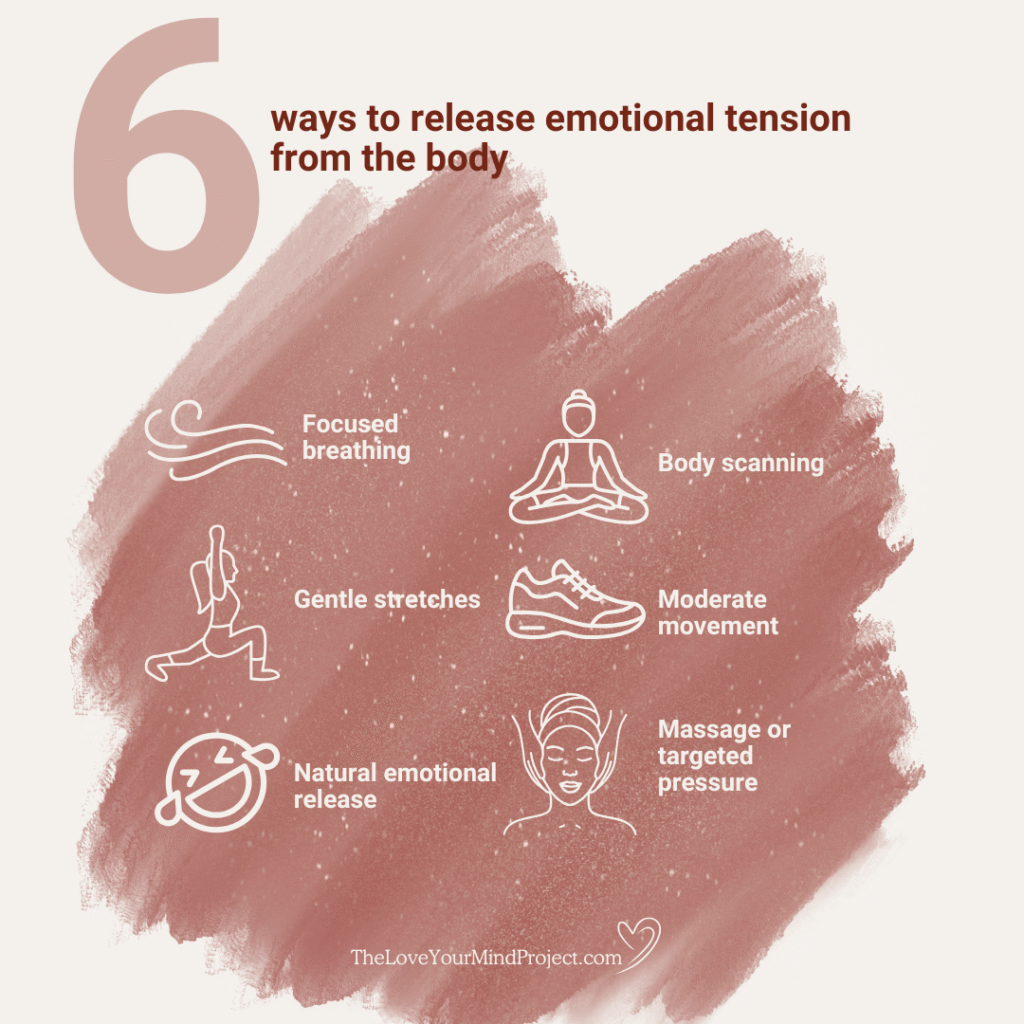

Focused breathing
Slow, deep breaths—specifically those from your diaphragm, with a longer exhale—can signal safety to the body, making it easier to release pent-up tension.
Diaphragmatic breathing can boost oxygen levels, slow the heart rate, reduce blood pressure, and relax the muscles. 2
How to practice:
- Lie on your back or sit upright.
- Place one hand on your chest and one on your abdomen.
- Inhale slowly through your nose, letting your belly expand (try to keep your chest still).
- Exhale slowly through your mouth, making your exhale slightly longer than the inhale.
- Repeat as many times as you like.

Body scanning
A body scan is a mindfulness technique that helps you build awareness of where the emotional tension may be stored.
The goal is to slowly notice sensations, from head to toe, without judging, diagnosing, or trying to change what you feel. Simply observe, paying attention to whether you’re clenching your jaw or raising your shoulders.
This practice strengthens a skill known as grounding. It helps anchor you in the present moment instead of dwelling on past stress or future worries.
And when you notice tension, you can gently invite that area to soften. Sometimes awareness alone is enough to begin releasing emotional tension in the body.

Gentle stretches
Gentle stretching can help loosen tight muscles and stimulate the body’s relaxation response.
Simple stretches that may help relieve emotional tension include:
- Neck stretch: Lower your chin toward your chest, then slowly turn your head toward one shoulder. Pause for a few breaths before repeating on the other side.
- Chest opener: Clasp your hands behind your back and slowly straighten your arms to open your chest. Hold for several deep breaths.
- Child’s pose: From all fours, slowly sit back on your heels, stretch your arms forward, and rest your head on the floor, allowing your back, neck, and shoulders to relax.

Moderate movement (based on what your body can handle)
Regular exercise helps regulate the stress response. Over time, it may:
- Boost endorphins, also known as natural pain relievers.
- Increase oxygen flow.
- Lower stress hormone levels.
- Improve circulation.
- Reduce resting heart rate.
High-intensity movement—like running, HIIT, or kickboxing—can create a stronger endorphin release.
But low-impact movement—like walking, swimming, cycling, or dancing in your kitchen—can be just as effective for releasing emotional tension.
Consistency matters more than intensity.
The American Heart Association generally recommends about 150 minutes (2.5 hours) of moderate activity each week. But start where you are—and give yourself grace if you’re already feeling depleted.

Natural emotional release (laughing, crying, even screaming)
Letting yourself truly feel can release emotional tension.
Laughing deeply can stimulate the heart, lungs, and muscles and release endorphins—effects that can leave you more relaxed afterward.3 Crying can also release feel-good chemicals. Even screaming into a pillow can feel cathartic and act as an emotional release.4
This is one of many reasons why you don’t have to police emotional expression. It’s not a weakness—it’s a biological process. Give yourself permission to let it out, sis.

Massage or targeted pressure
A massage helps relax tight muscles and may lower cortisol levels—the hormone released during times of stress—while increasing serotonin, a feel-good chemical that supports mood regulation.5
You can opt for a professional massage that focuses on deeper muscle tension. Or try acupressure, a technique that applies targeted pressure to specific areas of the body to help ease tension.
Self-massages can also release tension. Use your hands to massage your temples. Or tools, like a foam roller, tennis ball, or massage gun, to target harder-to-reach muscles.
Releasing emotional tension takes patience—not pressure
Learning to release emotional tension in the body begins with noticing.
Lean into those moments with curiosity—not fear. Compassion instead of judgment. And patience rather than urgency.
This isn’t a process you can force or rush. Allow the release to happen naturally, understanding that you could be unlearning years of “holding it all together.”
Releasing emotional tension in the body: FAQs
What’s the best way to release emotions trapped in the body?
There isn’t one best method—only what works for you. The overall theme is awareness and safe movement. Try different approaches, like breathing exercises, stretching, physical activity, or massage, and notice how your body responds.
Can emotions make you feel tired or sore?
Yes. Difficult emotions can activate the body’s stress response, which may keep muscles tight and the nervous system on alert. Over time, this can contribute to aches, soreness, and overall fatigue.
How does physical movement help relieve emotional tension?
Movement helps regulate the body’s stress response so it doesn’t remain in a tense state. Regular exercise can lower stress hormones and increase endorphins. Gentler practices, like deep breathing, can activate the body’s relaxation response and encourage muscles to soften.
References
Last accessed February 2026
- Understanding the stress response – Harvard Health. (2011, June 15). Harvard Health. https://www.health.harvard.edu/staying-healthy/understanding-the-stress-response ↩︎
- (2023, August 28). Diaphragmatic Breathing Exercises & Benefits. Cleveland Clinic. https://my.clevelandclinic.org/health/articles/9445-diaphragmatic-breathing
↩︎ - Stress relief from laughter? It’s no joke. (2023). Mayo Clinic. https://www.mayoclinic.org/healthy-lifestyle/stress-management/in-depth/stress-relief/art-20044456 ↩︎
- Newhouse, L. (2021, March). Is crying good for you? – Harvard Health. Harvard Health. https://www.health.harvard.edu/blog/is-crying-good-for-you-2021030122020 ↩︎
- Marsolek, A. (2022, July 20). Can massage relieve symptoms of depression, anxiety and stress? Mayo Clinic Health System. https://www.mayoclinichealthsystem.org/hometown-health/speaking-of-health/massage-for-depression-anxiety-and-stress ↩︎

- Is the Calm app worth it? How it can help you prioritize rest - October 15, 2026
- Is Headspace worth it considering our unique needs? - October 8, 2026
- The Exhale app: Wellness support that actually centers Black women - October 2, 2026