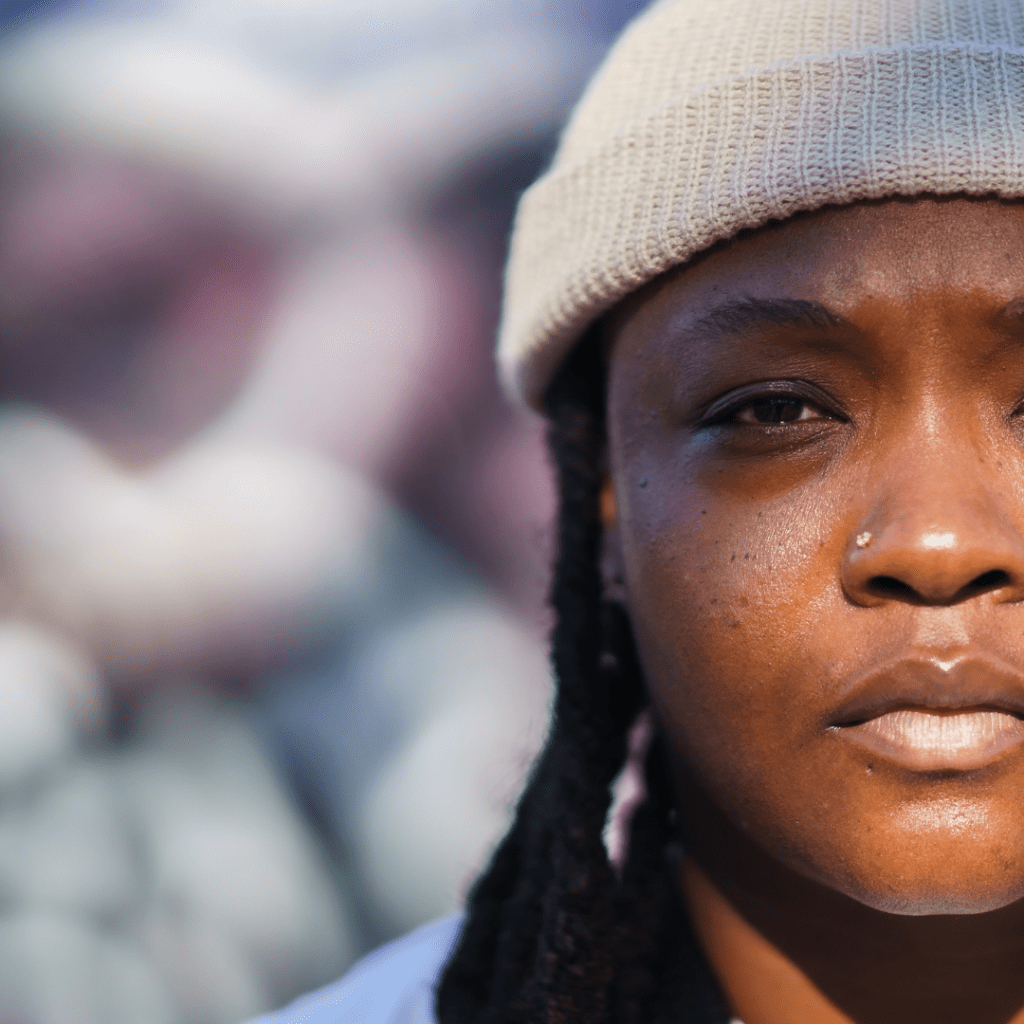
Receiving a cancer diagnosis can stop everything.
It doesn’t just affect your body—it can shake your sense of self, your faith, and your relationships all at once.
In a moment, life can shift from typical routines and future plans to doctors’ appointments, treatment discussions, and difficult questions around “what’s next?”
Yes, it’s a lot. And it can demand a level of support you might not be used to.
This article is here to help. We’ll walk through ways you can protect your mental health while coping with a cancer diagnosis—because your experiences, feelings, and emotions matter. And you deserve support throughout this journey.
Coping with a cancer diagnosis can bring overwhelming emotions—and that’s okay
Whatever you’re feeling right now is valid. A cancer diagnosis can bring waves of complex emotions. So know that there’s no right way to feel about it.
“Many people feel shock, fear, sadness, or anger in the days and weeks after a diagnosis,” said Jamie Faria, advocacy associate at Massachusetts-based Mesothelioma Hope. “It’s also common to experience anxiety about the future or to feel overwhelmed by the number of medical decisions that suddenly arise.”
But emotions don’t define who we are—they’re responses to life’s moments.
Your feelings have less to do with your values, spiritual beliefs, or character and more to do with everything you’ve experienced up to this point.
And “good” mental health holds space for all types of emotions—including those that don’t feel so good. So even if you’re used to being the strong one who “controls” how you feel and holds it together for everyone else, it’s okay to feel vulnerable, slighted, or nothing at all.
Why a cancer diagnosis can be especially heavy for Black women
Cancer is emotionally challenging for everyone, but we often carry unique experiences that can make it harder to cope.
To start, Black women are more likely to be diagnosed with certain cancers at later, more advanced stages.1 Barriers to equitable care and a real mistrust of the healthcare system can play a role.
Weathering may also be a factor.
Research suggests that our bodies can age faster from enduring cumulative wear and tear from chronic social, economic, and political stressors.2
That means we can carry heavy mental and emotional strain long before a cancer diagnosis. We may push it aside to appear “okay,” continue caring for loved ones, or simply survive. But it’s there.
And if expressing difficult emotions is seen as a weakness, character flaw, or lack of faith, it may feel easier to carry the burden in silence.
All of this is real and deserves space. But it’s also why protecting your mental health during a cancer diagnosis isn’t small—it’s essential.
Ways to protect your mental health when coping with a cancer diagnosis
There’s no one best way to cope with a cancer diagnosis. But there are things you can do to help you stay present and feel supported—so you’re not carrying everything alone.
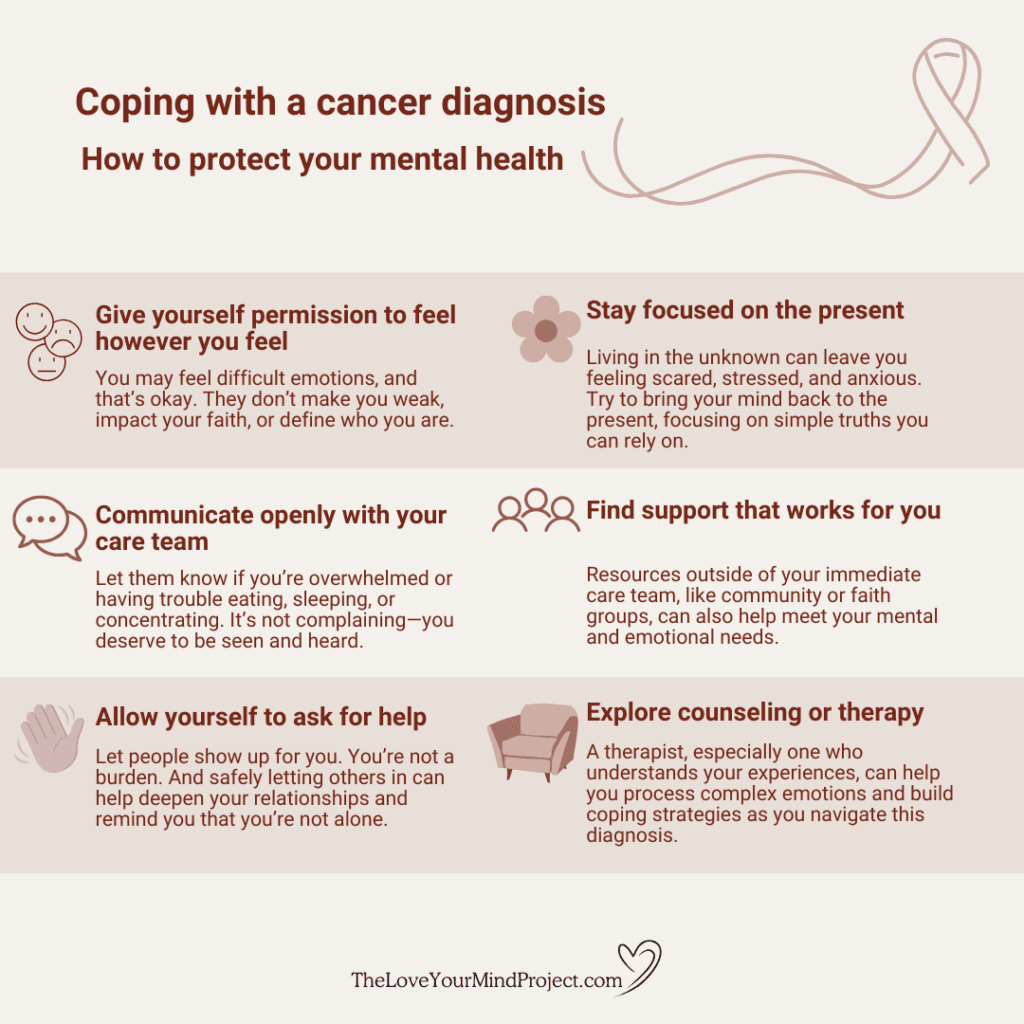
Give yourself permission to feel however you feel
It’s understandable to want to stay strong for others—but that’s not your job.
You don’t have to be positive all the time. And you don’t have to make everyone around you comfortable with your diagnosis. Doing so can slowly chip away at your mental health.
Putting on a brave face when you’re terrified, exhausted, or angry can disconnect you from your emotions and what you actually need. Suppressing big emotions can make them even harder to process over time.
Whatever you’re feeling—grief, fear, anger, even betrayal—is a natural response to a life-changing diagnosis. So allow yourself to feel, without suppressing, judging, or letting it define you.
Stay focused on the present
A cancer diagnosis can send your mind racing into the future—wondering what treatment will be like and how your life will change.
But focusing too much on what’s ahead—especially if you tend to expect the worst—can keep you feeling stressed and anxious, making an already heavy experience even heavier.
Instead, practice bringing yourself back to the present.
Deep breathing, gentle movement, affirmations, or journaling can remind you that right now, in this moment, you’re safe—giving your mind a much-needed break.
Communicate openly with your care team
Your care team isn’t just there for your physical health—they’re there for your overall well-being.
If you’re feeling overwhelmed, anxious, or depressed, let them know. If you’re not sleeping, eating, or able to concentrate, share that too.
These aren’t complaints—and you’re not being “too much.” They’re important signals that can help guide your care.
And if you ever feel dismissed or unheard, it’s okay to advocate for yourself. This can look like bringing someone you trust to appointments or seeking a provider who better understands your needs.
You deserve to feel seen and supported.
Find support that works for you
You can take advantage of support outside of your immediate care team to meet your additional mental and emotional needs.
“Support resources can provide reliable information, connect patients with support groups, and remind people they’re not alone in what they’re experiencing,” said Faria.
For example, Mesothelioma Hope offers a Mental Health Guide to help individuals with cancer and their families find emotional support alongside their medical care.
Allow yourself to ask for help
Asking for help can feel uncomfortable, especially if you’re used to being the one others rely on.
But connection matters to our mental health.
Letting people show up for you gives them a chance to express their love and support in meaningful ways.
If you can, try to be specific. You might ask someone to come to an appointment with you or help with errands on treatment days.
You’re not a burden for asking for help.
This level of vulnerability can deepen your relationships and remind you that you don’t have to go through this alone.
Explore counseling or therapy
Because of the emotional toll a cancer diagnosis can take, partnering with a mental health professional can provide invaluable support.
Some therapists work primarily with people navigating serious illnesses. They can help you process the complex emotions that come with a diagnosis, build coping strategies, and offer a space where you don’t have to manage anyone else’s feelings about what you’re going through.
Many cancer centers have mental health professionals on staff, but you can also search for your own—focusing on therapists who understand your lived experiences.
“Community-based support groups, culturally responsive counseling, and patient advocacy organizations can make a big difference,” said Faria. “These spaces can often provide a more comfortable environment where you feel seen, understood, and supported while navigating the emotional and practical challenges of cancer.”
If you’re not sure where to start, learning how to find a therapist can help.
You don’t have to face cancer alone
Support is out there—and you don’t have to wait until you’re overwhelmed to seek it out.
Your mental health matters at every stage of this journey. Protecting it isn’t something to feel ashamed of—it’s a profound act of self-love.
Coping with a cancer diagnosis FAQs
How do you mentally handle a cancer diagnosis?
There’s no single right way. A cancer diagnosis can bring complex emotions that come and go. It can help to give yourself space to simply feel and validate your experiences, while leaning on support from loved ones, your care team, or even a therapist.
Is it normal to feel depressed after a cancer diagnosis?
Yes, it is. Feeling sad, withdrawn, or even hopeless is a natural response. And while these feelings are valid, they can also reflect emotional needs that deserve care and attention. If depression symptoms begin to get in the way of living your life, reaching out to your doctor or a mental health professional can help.
How can I manage anxiety after a cancer diagnosis?
Anxiety can pull your focus into the future, but you can counter it when you gently bring your attention back to the present. You might try breathing exercises, limiting information overload, or talking with a therapist to ease its intensity.
Should I see a therapist after being diagnosed with cancer?
It can definitely help. Therapy provides a safe space to process emotions, practice coping strategies, and simply feel less alone. If you’re feeling overwhelmed, reaching out could be one of the most caring things you can do for yourself right now.
References
Last accessed April 2026
- CDC. (2025, February 13). Cancer and African American People. Cancer. https://www.cdc.gov/cancer/health-equity/african-american.html ↩︎
- Forde, A. T., Crookes, D. M., Suglia, S. F., & Demmer, R. T. (2019). The weathering hypothesis as an explanation for racial disparities in health: a systematic review. Annals of Epidemiology, 33, 1-18.e3. https://doi.org/10.1016/j.annepidem.2019.02.011 ↩︎

- Is Headspace worth it considering our unique needs? - October 8, 2026
- The Exhale app: Wellness support that actually centers Black women - October 2, 2026
- Feeling unlovable even in a relationship? Here’s what to do with that feeling - September 24, 2026