
We all respond differently to overwhelm. None of those responses is right or wrong—they just are.
While some people may be an open book, sharing everything they feel, some of us simply shut down.
Maybe you pull away, unsure of what to say or whether it’ll even make a difference. Or perhaps you go numb emotionally, unable to feel anything at all.
If you tend to shut down emotionally, it’s likely not because you don’t care. Sometimes our system becomes so overwhelmed that being vulnerable no longer feels safe.
This article isn’t here to label, shame, or “fix” you. It’s here to help you understand what emotional shutdown is, why it can develop, and why it deserves compassion—not judgment.
What does it mean to shut down emotionally?
Shutting down emotionally can mean you have trouble feeling or expressing your emotions.
Sometimes called emotional numbness, a shutdown is a protective response—often involuntary—that can come from sustained trauma, stress, or emotional suppression.
Emotional shutdown is not the same as healthy emotional regulation, emotional maturity, or setting boundaries. It’s more like your brain hitting an override button, disconnecting from your thoughts and feelings to push through.
Why does it matter if you shut down emotionally?
Even if you can’t fully feel or express your emotions, they’re still there.
Anger, disappointment, abandonment, and grief can all live in the body, whether you feel them directly or not.1 And over time, this can impact how you process and respond to life in several ways.
For example, you may begin to feel:
- Stuck in unhealthy patterns: An emotional shutdown can make it more difficult to heal and learn from past wounds, since you can’t access how you feel.
- Disconnected from yourself: You can lose sight of your interests, passions, and emotional needs when you shut down—feeling as if you’re not truly living, but existing on autopilot.
- Numb to happiness: When you block difficult emotions, you might also block joy, peace, love, and other fulfilling experiences.
- Isolated from loved ones: Even when around others, emotional distance can leave you feeling alone, unsupported, or misunderstood. You might even struggle to maintain relationships.
- Physical discomfort: Suppressed emotions can contribute to tension, aches, fatigue, and other stress-related symptoms in the body.
What shutting down emotionally can look like
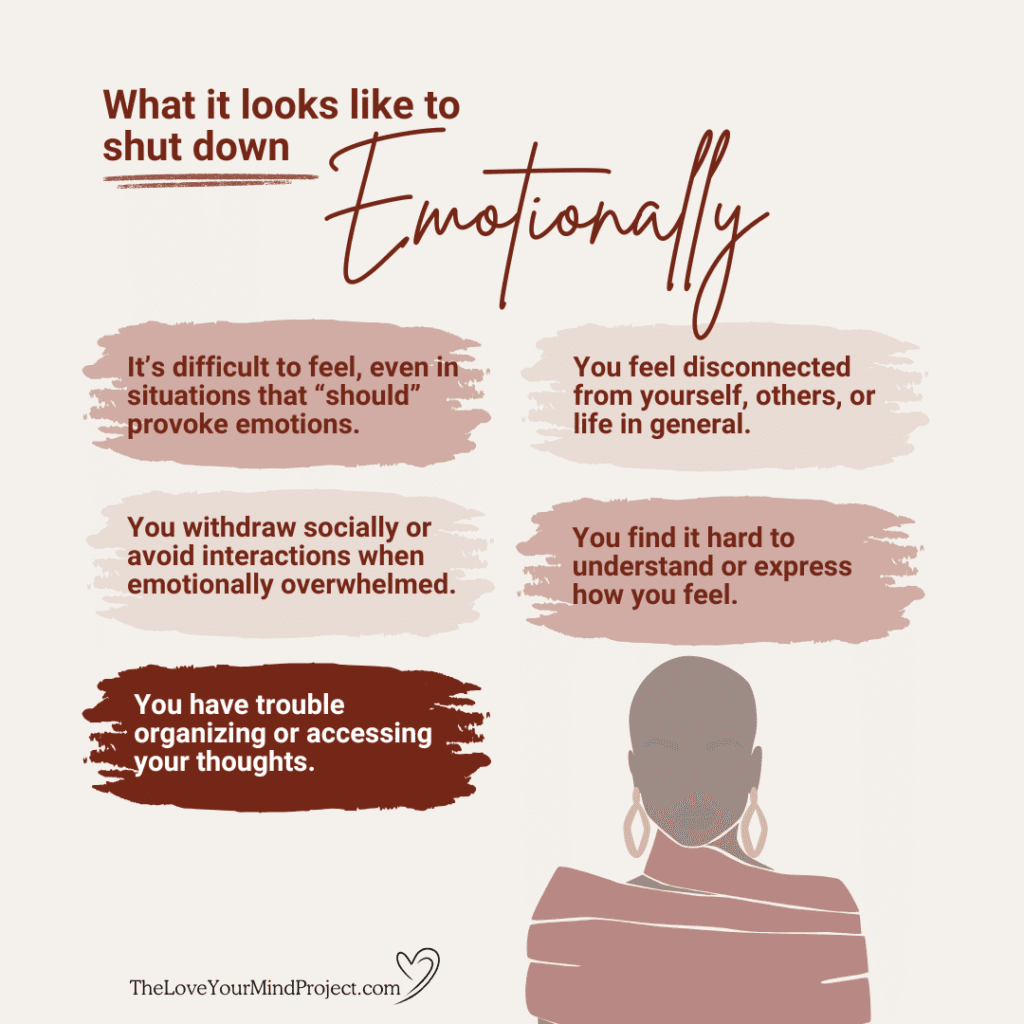
Emotional shutdown doesn’t look the same for everyone, but common experiences could include:
- An inability to feel, even in situations that “should” feel emotional.
- Feeling disconnected from yourself, others, or life in general.
- Withdrawing socially or avoiding interactions when overwhelmed.
- Struggling to understand or express how you feel.
- Difficulty organizing or accessing your thoughts.
On the outside, it may look like you’re calm, unbothered, or distant. Inside, your nervous system is likely overloaded and searching for relief.
4 reasons you may shut down (when emotions get intense)
There isn’t always a single cause of emotional shutdown. It can develop in response to layered experiences over time.

Chronic stress or burnout
So many “common” stressors can keep the body in survival mode—from challenging finances and a hostile work environment to a demanding home life, and even recent events traumatizing our communities.
Without a space to release and recover, shutting down emotionally can become your body’s way of conserving energy so you can continue functioning.

Ongoing emotional neglect
When you don’t get the emotional support you need from a parent, a partner, or other significant relationship, you can learn to suppress your emotions to avoid disappointment.
For example, a child criticized for expressing fear may suppress these feelings even as an adult. Or a woman whose sadness is routinely minimized by her partner may downplay her needs to keep the peace.
If it never feels safe to express how you feel, shutting down emotionally can seem like the only option.

Unresolved trauma
Trauma isn’t always a single, dramatic event. It can also come from ongoing harm, such as verbal or emotional abuse, or experiences that are normalized but no less harmful—like separation from a caregiver, divorce, or an unstable home life.
When trauma goes unresolved, it can deeply impact your sense of safety and self-worth to the point where your system shuts down—not to avoid, but to survive.

Grief and loss
The pain from a loss can be overwhelming and exhausting. It may feel endless or difficult to accept. Going emotionally numb can become a way to cope and keep moving forward.
Grief isn’t limited to the loss of a loved one. The end of a relationship, a major life transition, or losing a version of yourself can all trigger it. When left unprocessed, grief can contribute to emotional shutdown.
If this feels familiar, that’s okay
Let’s be clear, sis. Shutting down emotionally isn’t something you’re doing wrong. It’s a learned response to emotional pain, stress, or overwhelm. You deserve compassion, not judgment.
And you don’t need to be fixed. You just need safe spaces where you can be vulnerable. You can create those spaces, at your own pace, as you begin to notice how you feel and allow yourself to feel it (without judgment).
And if you ever want support unpacking where this shutdown response came from and ways to unlearn it, working with a culturally-affirming therapist can be a safe place to start.
Shutting down emotionally FAQs
What does it mean to shut down emotionally?
Shutting down emotionally typically means disconnecting from your emotions or thoughts, making it difficult to feel much of anything. It’s a protective, often involuntary, response when the nervous system feels overloaded.
Is shutting down emotionally a trauma response?
It can be. Emotional shutdown may develop after trauma, but it can also stem from chronic stress, emotional abuse, neglect, or suppressed feelings over time.
What does emotional shutdown feel like?
You may feel numb, distant, or socially withdrawn. It can also be difficult to understand or name how you feel. On the outside, you may seem disinterested or unbothered—even though your mind is overwhelmed and trying to cope.
References
Last accessed February 2026
- Murnan, A. (2023, August 21). Can emotions be trapped in the body? What to know. Medicalnewstoday.com; Medical News Today. https://www.medicalnewstoday.com/articles/emotions-trapped-in-the-body ↩︎

- Is Headspace worth it considering our unique needs? - October 8, 2026
- The Exhale app: Wellness support that actually centers Black women - October 2, 2026
- Feeling unlovable even in a relationship? Here’s what to do with that feeling - September 24, 2026