If you experience depression after drinking, it could be linked to habits that don’t serve you or unresolved pain—but there are compassionate ways to improve your mood and overall wellness.

If you’ve ever woken up after a night of drinking with more than a headache—maybe your mood drops, you feel heavy, or just emotionally “off”—it might be more than a hangover.
Depression after drinking is more common than many people realize. And if it happens to you, it’s not because you’re overly emotional or lacking self-control.
This article breaks down what’s happening in your mind and body during that emotional crash—and how you can move through it with compassion, not judgment.
>> Subscribe—and get weekly resources, tips, and encouragement for FREE
What's in this article?
Is depression after drinking really a thing? Here’s what to know
It is.
After drinking, some people get an emotional dip that can range from mild sadness to heaviness to hopelessness. These feelings may be even more intense if you already live with depression, anxiety, or chronic stress.
And for many of us, there’s an added layer: the stigma.
You may feel guilty when drinking alcohol, whether because of your faith or the belief that using alcohol to cope means you’re weak, irresponsible, or lack discipline. When shame and criticism pile onto an already low mood, it can make an emotional crash much more devastating.
The truth? Dealing with depression after drinking doesn’t make you a disgrace. You don’t lack morals, strength, or constraint. And you don’t deserve shame.
This is not about willpower, but about how alcohol affects the brain and body—and even understanding that much can help loosen its grip.
>> It’s okay for Black women to get support for our mental health—Here’s why
What causes depression after drinking?
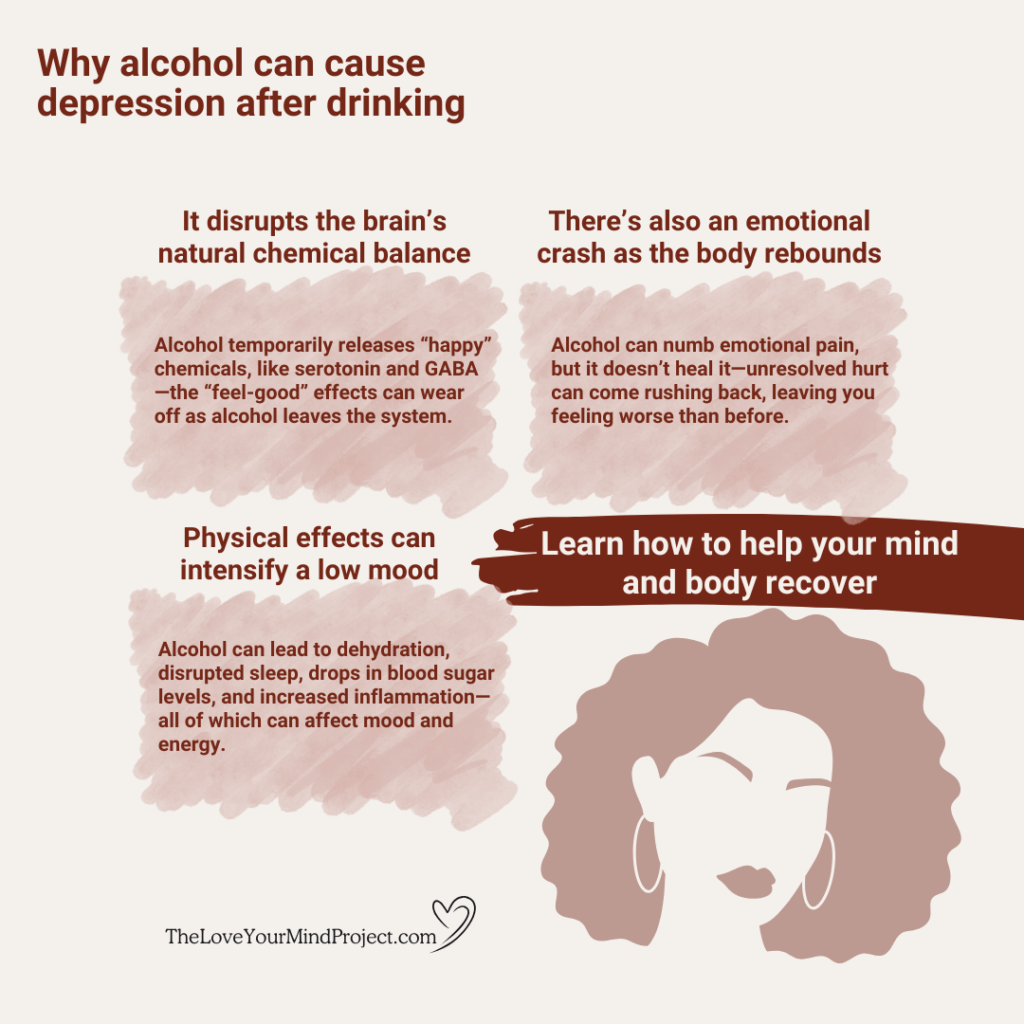
Not everyone experiences emotional lows after drinking. But if you do, it could be from a combination of chemical, emotional, and physical changes in the body.
Alcohol disrupts the brain’s natural chemical balance
Alcohol temporarily increases neurotransmitters in the brain that affect mood. It can boost serotonin (often called a “feel-good” chemical) and the calming effects of GABA.1 It’s one reason why drinking can leave you feeling relaxed, happier, or more social—initially.
Those chemical effects wear off as your body processes the alcohol and your brain shifts back toward balance. This rebound can leave you feeling more anxious, irritable, or emotionally low the next day.2
There’s also an emotional crash as the body rebounds
Any grief, tension, or stress you felt when sober can seem to melt away while drinking. But while alcohol can numb emotional pain, it doesn’t heal it.3
As it wears off, the unresolved pain can come rushing back. You might even feel worse than before, as your brain compares how you felt with alcohol in your system to how you feel without it.
This can create a vicious cycle of chasing that intoxicating feeling—numbing pain, instead of processing and releasing it.
>> Some trauma is generational—and needs unpacking to heal. Learn more.
Physical effects can intensify the low mood
Alcohol may trigger several physical symptoms that can leave you feeling heavy or emotionally “off.” Here are common examples.
- Dehydration can contribute to fatigue, irritability, and brain fog.4
- Disrupted sleep makes it harder to reach deep, restorative rest, which can erode mental health.5
- Drops in blood sugar levels can affect mood and energy.
- Increased inflammation has been linked to depression symptoms.6
Symptoms of post-drinking depression
It doesn’t look the same for everyone, but if you have depression after drinking, you might experience these common symptoms.
- A sense of sadness, emptiness, or heaviness
- Brain fog or trouble concentrating
- Irritable or easily overwhelmed
- Guilt, shame, or regret
- Heightened anxiety or restlessness
- Isolation or wanting to withdraw socially
>> Feeling symptoms even without drinking? Learn more about depression
How to support yourself if you feel depressed after drinking
These steps, along with self-kindness, can help you reset emotionally if you wake up feeling low after drinking.
- Give your body time to recover: Focus on the basics, like sleep, hydration, and nourishing food to help your body bounce back.
- Check in with your emotions: Ask yourself what feelings you may be ignoring or trying to push aside—writing them out can help you uncover unmet emotional needs.
- Explore healthier coping tools: If alcohol becomes your stress relief or way to numb sadness or hurt, consider alternatives that better support your mind and body—like therapy, breathwork, meditation, or journaling.
- Be mindful of your drinking habits: Some experts recommend avoiding alcohol, while others suggest women limit themselves to one drink per day.7 If you drink, eat beforehand and stay hydrated throughout.
- Practice self-compassion: There’s no room for judgment or shame here. You’re not less than, broken, or immoral. You’ve simply identified a habit that doesn’t serve you. Show yourself grace and compassion on this journey.
>> Never feel good enough? Here’s why and how you can heal
When to reach out for support
Talking to a doctor, therapist, or mental health professional can help you understand the underlying causes of depression after drinking and develop coping strategies that actually work for you.
Consider reaching out if:
- Your mood doesn’t return to your baseline within a couple of days.
- You feel like you’re using alcohol to numb sadness, stress, or loneliness.
- The symptoms feel heavy, constant, or overwhelming.
- You have thoughts of self-harm or suicide (you can call or text 988 for immediate support).
- The above mental wellness tools feel impossible or ineffective.
It’s okay to seek help in hard seasons. We weren’t meant to carry everything alone. Reaching out isn’t failure—it can be a powerful and courageous step toward healing.
>> Here’s how to get mental health help—and remember, you’re worthy of it
Depression after drinking FAQs
Why am I so depressed after drinking?
Alcohol temporarily increases “feel-good” chemicals, like serotonin and GABA, which can drop when it leaves our system. This could trigger a low mood that may leave you feeling worse than before, especially if you already deal with stress or depression, or if you drink regularly to cope.
Does alcohol cause depression?
Alcohol can trigger or worsen depression symptoms8, especially if you drink regularly or heavily, which for women is more than eight alcoholic drinks in a week. Alcohol can also make it harder to heal from depression. It can suppress emotions, which makes it harder to uncover and work through underlying causes.
Can alcohol trigger depression even if I only drink occasionally?
Yes, it can, because a post-alcohol crash is a biological response. Whether you experience it and how badly it hits depends on factors like your hormones, brain chemistry, stress levels, and how much you drink.
How long does post-alcohol depression last?
For many people, depression from alcohol might go away within a day or two, but for some, symptoms can last longer.9 It’s always a good idea to check in with a healthcare provider or therapist if your symptoms feel overwhelming or make it hard to get through the day.
References
Last accessed December 2025
- Oscar-Berman, M., & Marinkovic, K. (2025). Alcoholism and the Brain: An Overview. Alcohol Research & Health, 27(2), 125. https://pmc.ncbi.nlm.nih.gov/articles/PMC6668884/ ↩︎
- Hangovers | National Institute on Alcohol Abuse and Alcoholism (NIAAA). (2024). Nih.gov. https://www.niaaa.nih.gov/publications/brochures-and-fact-sheets/hangovers ↩︎
- Lebow, H. I. (2016, October 28). Emotional Drinking: Are You Using Alcohol to Feel Better? Psych Central. https://psychcentral.com/addictions/emotional-alcohol-drinking-to-cope ↩︎
- Clinic, C. (2025, March 28). Dehydration and Mental Health: What’s the Connection? Cleveland Clinic. https://health.clevelandclinic.org/dehydration-and-affect-on-mental-health ↩︎
- How Sleep Affects Your Health. (2022, June 15). NHLBI, NIH. https://www.nhlbi.nih.gov/health/sleep-deprivation/health-effects
↩︎ - Lee, C.-H., & Giuliani, F. (2019). The Role of Inflammation in Depression and Fatigue. Frontiers in Immunology, 10. https://doi.org/10.3389/fimmu.2019.01696 ↩︎
- CDC. (2025, February 25). Alcohol Use and Your Health. Alcohol Use. https://www.cdc.gov/alcohol/about-alcohol-use/index.html ↩︎
- Alcohol and Depression: The Link Between Alcoholism and Depression. (2025, May). American Addiction Centers. https://americanaddictioncenters.org/alcohol/risks-effects-dangers/depression ↩︎
- (2020, July 30). Why You Feel Depressed After Drinking and How to Handle It. Healthline; Healthline Media. https://www.healthline.com/health/mental-health/depression-after-drinking ↩︎