
As Black women, we often carry more than our own struggles—we bear the weight of what our parents, grandparents, and great-grandparents endured. Cycles of survival, silence, and shame passed down like heirlooms.1
But you can put the baggage down, freeing yourself and those who come after you.
Breaking generational cycles is hard, but it’s also a profound act of love—one that starts with you and creates a ripple effect for future generations.
This guide walks through how to identify, heal from, and end painful family patterns so that you can build a new legacy of emotional wellness and freedom.
What are generational cycles?
Generational cycles are learned patterns of behaviors, beliefs, and emotional responses passed from one generation to the next.2 Some are healthy, like traditions of faith or community involvement. But others can be deeply harmful, like emotional suppression, abuse, or addiction—which for many Black families can stem from survival.
“With a history of systemic oppression, trauma responses from our caregivers and theirs before them are inevitably passed down as ‘culture,’” said Fanny Tristan, licensed trauma therapist and founder of New York City-based Her Soul Supply. “The danger is that these patterns can keep us in a constant state of hypervigilance that adds more stress to the body.”
Why family patterns are so hard to break
It’s challenging to let go of behaviors that have existed for generations, especially when they once served a purpose. You may feel like you’re challenging the very foundation of your family’s core or stepping outside what’s considered normal—and in many cases, you are.
Dismantling harmful patterns could mean exposing what others have spent years suppressing. This could make talking openly about pain, dysfunction, or trauma feel like betrayal.
So you may be encouraged to sweep it under the rug or simply “give it to God.” But the cycle continues as long as the behavior does—often at the expense of your overall wellness.
The effects of harmful generational cycles
Painful patterns can erode our mental and emotional well-being, especially those that come from trauma.
Studies show that trauma can be passed down behaviorally and genetically. And additional research has found that children of trauma survivors are more likely to struggle with anxiety, depression, and PTSD.3,4
Whether it’s debilitating fear and anxiety, troubling relationships, or struggling to see your own value and worth, unhealthy patterns can stop you from experiencing peace, joy, and fulfillment.
The strength of being the cycle-breaker
Being the first in your family to choose healing and self-love is brave work.
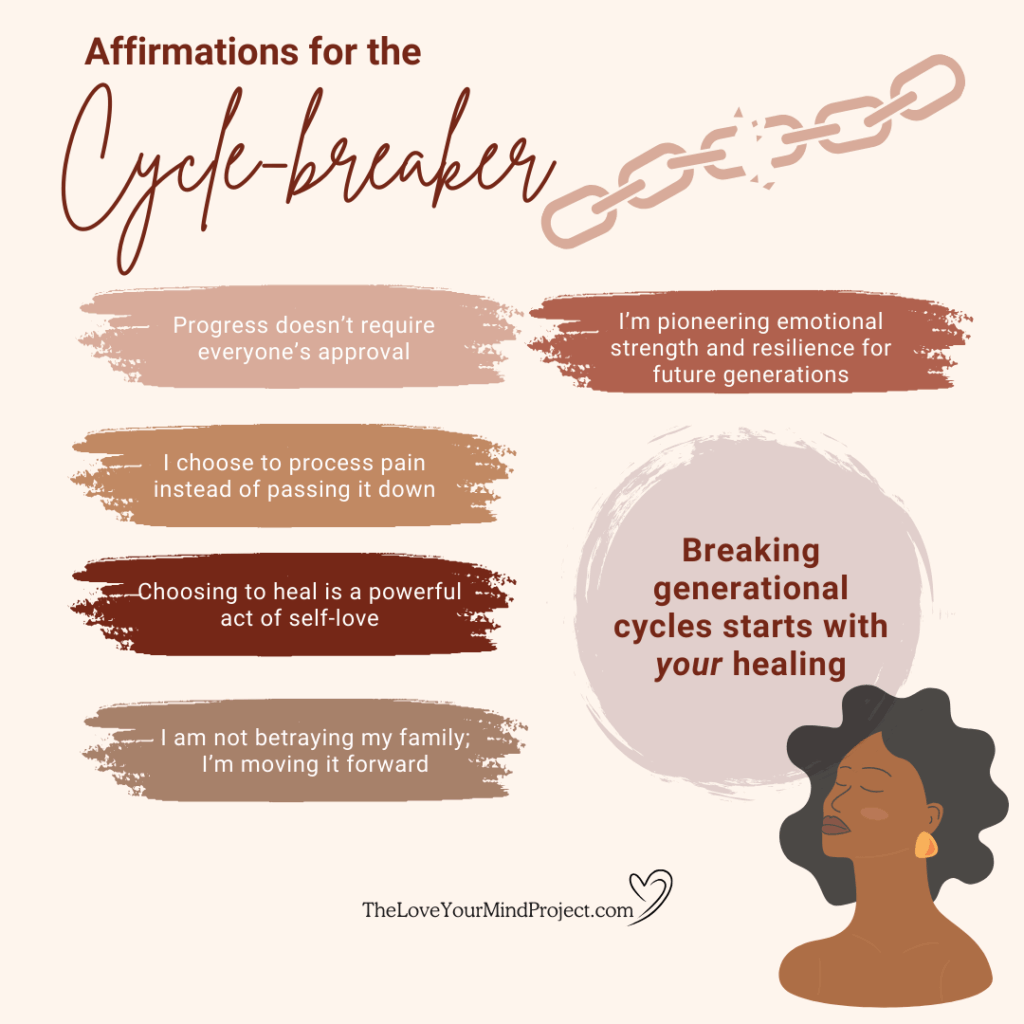
“Change will often be met with resistance, so you may not win everyone over, but progress doesn’t require everyone’s approval,” said Tristan. “It may feel frustrating and isolating to be the only one in your family doing this work, but simply choosing to invest in your own healing is already a powerful act of change.”
Yes, you’re doing something powerful. You’re choosing to process pain instead of passing it down, and creating space for emotional safety, resilience, and unshakeable joy.
How to break generational cycles—and build a new legacy
Breaking generational cycles is a journey of self-discovery, self-trust, and self-compassion. These steps can help you begin.
Recognize the patterns
The first step is becoming aware of the unhealthy patterns that have shown up in your life and the lives of family members. Common ones could include suppressing emotions, avoiding conflict, constantly criticizing yourself, and struggling to forgive.
“Many unhealthy coping strategies are disguised as ‘this is just how our family is’ or ‘this is just what Black people do,” said Tristan. “But when we can name certain social norms as trauma responses, we can intentionally choose healthier skills that support our well-being.”
Process childhood trauma
Generational cycles might be rooted in painful childhood experiences that haven’t been resolved. Acknowledging past abandonment, emotional unavailability, or physical abuse isn’t about blaming anyone—it’s about seeing the wound so you can heal it.
Make space to grieve
Breaking a cycle could mean letting go of roles or patterns you’ve held on to for a while. And this may trigger grief.
It’s normal to grieve a parent-child relationship you realize you may never have, or mourn that you’re no longer the peacemaker, able to keep everyone happy and proud.
This release is necessary for healing. Allow the space to grieve by letting yourself feel it all—sadness, anger, and disappointment, without judgment.
Mind the narrative
You’re choosing not to stay in a hard place. This isn’t weakness, being overly sensitive, or disloyal to your family. Breaking generational cycles doesn’t dishonor your ancestors.
So while you may hear different narratives from hurt family members or those who don’t understand, know that you’re laying a foundation that’ll make you stronger and move your family forward.
Define your legacy
You’re rewriting your story, so what values do you want to embody? It could be being willing to talk about anything, no matter how difficult the topic. Or maybe it’s emotional vulnerability or parenting with patience and grace. Your values can keep you grounded and motivated when the journey is hard.
Set boundaries that align with your values
Boundaries are not about cutting people off—they’re about protecting your peace and breaking free from patterns that harm you. Whether it’s saying “no” to requests that drain you, limiting contact, or being honest about your needs, your boundaries are necessary. And, yes, they’re valid.
Lean on support
Don’t do this alone. Keep close those people who support your healing and lend strength and encouragement.
“Whether through therapy, support groups, friendships, or community spaces, surrounding yourself with others who are also challenging generational patterns can provide motivation and relief,” said Tristan. “In the groups I facilitate, we often talk about how validating it is to see others facing the same struggles, holding onto hope, and celebrating real wins—that shared accountability and encouragement make the process much more sustainable.
Consider therapy
Breaking harmful family patterns can be overwhelming, especially without the right support. But therapy can help.
“I often describe breaking these cycles as untangling roots buried deep in the soil—taxing, delicate, and confusing,” said Tristan. “A therapist brings an outside perspective to help identify where the toughest knots are, giving you the tools to see patterns more clearly, to place them in the context of both family history and larger systems, and to create new ways of living that support your well-being.”
Be patient with your healing
You’re embarking on a lifelong journey. There will be setbacks, revelations, grief, joy, and growth. You won’t always have the answers, and that’s okay. Choosing you is progress in itself.
Breaking generational cycles FAQs
What are examples of generational cycles in Black families?
Examples could include: Suppressing feelings, avoiding conflict, physical or verbal abuse, financial struggle, and even addiction. Harmful family patterns in the Black community may stem from survival or longstanding systems that have made it hard for our communities to thrive in the U.S.1 Our parents, grandparents, and ancestors likely didn’t have the space or the tools to acknowledge and process their pain.
What does it mean to break generational cycles?
Breaking a generational cycle means consciously choosing to let go of the harmful behaviors, beliefs, and emotional responses that have been passed down in your family. It involves acknowledging and healing from your own trauma and setting new, healthier norms for yourself and future generations.
Why is breaking generational cycles so hard?
Family patterns can be deeply ingrained, feeling like a core part of who we are. When breaking them, it’s normal to experience guilt, frustration, and resistance from yourself and from family members who aren’t ready to change. But as challenging as it is, it’s necessary—for your freedom, your mental health, and the legacy you’re building.
References
- Hankerson, S. H., Moise, N., Wilson, D., Waller, B. Y., Arnold, K. T., Duarte, C., Lugo-Candelas, C., Weissman, M. M., Wainberg, M., Yehuda, R., & Shim, R. (2022). The Intergenerational Impact of Structural Racism and Cumulative Trauma on Depression. American Journal of Psychiatry, 179(6), 434–440. https://doi.org/10.1176/appi.ajp.21101000 ↩︎
- Moraleda, D. (2023, December 14). Generational Patterns: Break them Down to Build You Up. Jaiinstituteforparenting.com. https://www.jaiinstituteforparenting.com/generational-patterns-break-them-down-to-build-you-up ↩︎
- Yehuda, R., & Lehrner, A. (2018). Intergenerational transmission of trauma effects: putative role of epigenetic mechanisms. World Psychiatry, 17(3), 243–257. https://doi.org/10.1002/wps.20568 ↩︎
- DeAngelis, T. (2019, February 1). The legacy of trauma. Monitor on Psychology, 50(2). https://www.apa.org/monitor/2019/02/legacy-trauma ↩︎

- Is the Calm app worth it? How it can help you prioritize rest - October 15, 2026
- Is Headspace worth it considering our unique needs? - October 8, 2026
- The Exhale app: Wellness support that actually centers Black women - October 2, 2026