
You’re not the only one to wonder, “Why do I always feel alone?”
In fact, loneliness is considered an epidemic in the U.S., with nearly half of adults experiencing it, according to a 2023 report by the Surgeon General.
While we all feel lonely at times, when that emptiness lingers, it’s often a sign that something deeper is happening beneath the surface. And that sense of isolation can erode self-worth over time.1
So let’s explore what loneliness is, why it persists, and how you can begin the journey of radical self-connection and healing.
What it means to feel alone even when you’re with other people
Chronic loneliness is when you feel isolated or emotionally detached more often than not. You may find it challenging to build and maintain authentic relationships or still feel like you don’t belong even when surrounded by loved ones.
While not having the right people around can contribute to loneliness, when it persists, it can also be driven by internal factors like low self-esteem or self-worth.
The real reasons you might feel alone (even when you’re not)
Loneliness that lasts even when you’re with others could be internal, shaped by past experiences and coping strategies that protect us from being hurt again.
It’s hard to face what you really feel
You may have learned not to show weakness, but vulnerability is essential for genuine connection.2
Emotions, both the good and the hard ones, are part of being human. They’re signals that help us understand what we need and what’s missing in our lives.3
When you know and understand your emotions, you can connect with yourself on a deeper level. However, without a strong relationship with yourself, any connection with others might fall flat.
You don’t feel safe being your full self
As Black women, we know how to switch it up to navigate different environments—at work, school, or even family gatherings. But hiding parts of ourselves to appease others can leave us feeling unseen and detached.
There’s freedom when we feel comfortable showing up as our full selves. This emotional safety, the ability to be unapologetically you without fear of rejection or judgment, is what paves the way for meaningful connections with others where you no longer feel alone in this world.4
You struggle to put yourself first
One reason why you always feel alone could be that you’re neglecting your own needs.
Self-care is more than manis and pedis, it’s making space for those non-negotiables—like time to rest, cry, heal, and just be. It’s knowing that you’re worthy of being taken care of and being willing to stand behind it.
Constantly serving others while deprioritizing yourself only leaves you depleted and disconnected, no matter who’s around you.
You don’t feel worthy of real love
When we don’t believe we’re deserving of love or care, it’s hard to believe others will see otherwise. And for many of us, this can cause us to push people away.
Maybe you reject them before they can reject you, or you refuse to get emotionally involved so you’re not hurt when the relationship ends. And when it does end, we take it as proof of our unworthiness—like we’re bound to feel alone forever.5
When you know your inherent worth, rejection can be less scary. You can recognize the seasonality of different relationships and not take it personally or blame yourself when they’ve run their course.
It’s hard to trust again
Past traumas or betrayals can fuel mistrust, causing you to build walls that keep others out.
With unaddressed trust issues, we can become skeptical that anyone truly has our best interests at heart. That makes it difficult to be all-in or make a deep connection because we’re waiting on the other shoe to drop.6
Broken trust makes it hard to be vulnerable again—and understandably so. But as with any wound, it can heal if we allow it to. And as we heal, we’re able to enjoy the quality connections we still have and build new ones.
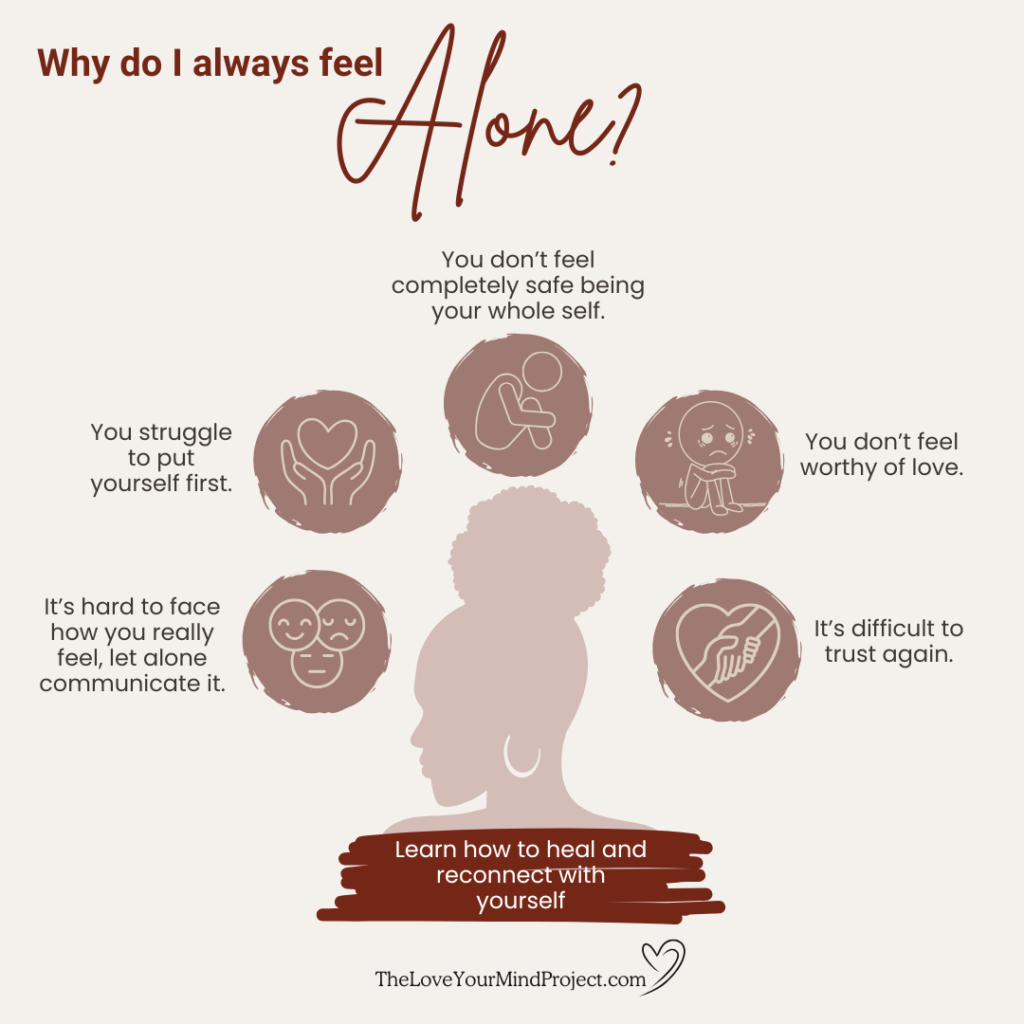
Always feeling alone isn’t a sign that you’re weak or broken. But loneliness is a stressor—one that can have a tangible impact on both the mind and body.
Research has connected persistent loneliness to increased risks of heart disease and stroke, mental health conditions like depression and anxiety, even dementia and premature death.7
This isn’t to scare you—it’s to show that what you’re feeling is real and worthy of being addressed. And yes, it can be addressed.
How to heal from loneliness (and reconnect with yourself)
Loneliness, no matter how persistent, doesn’t have to be permanent. Healing begins when you can acknowledge your emotional needs and tend to them with grace.
- See yourself with honesty and compassion: How you feel matters. Pay attention to your emotions. Learn to sit with the heavy ones, through journaling, breathing, or meditating, instead of pushing them away.
- Practice radical self-love: Flaws and mistakes don’t affect our worth and shouldn’t impact how we see, support, or talk to ourselves. Love and accept yourself—your whole self—even on those days you don’t feel like your best.
- Live authentically (and intentionally): That emptiness can fade when you’re living a life that’s true to you and not based on others’ expectations.8 Explore your values and passions. Making space for what you genuinely love can draw people with shared values who are willing to see and accept you fully.
- Nurture safe, rewarding connections: Spend more time with the people who genuinely value and support you. Practice vulnerability with discretion—sharing your world with those who have earned your trust.
And if any of these steps feels too big to take on your own—or if past trauma makes it hard to even begin—know that therapy can be a powerful way to heal and rediscover yourself.
Why do I always feel alone? FAQs
Why do I feel alone when I’m loved?
Feeling lonely can be less about who’s around you and more about feeling seen, accepted, or understood. Even when you’re surrounded by love, you can still feel deeply disconnected, especially if you don’t accept or feel comfortable being your true, full self.
What is it called when you always feel alone?
If your feelings of loneliness are persistent, it could be chronic loneliness—feeling isolated or emotionally detached for long periods of time, no matter who’s around. You’re not antisocial. It’s a sign your emotional needs aren’t being met.
Is it normal to feel lonely all of the time?
Loneliness is common, especially if digital connections replace real ones. But you don’t have to stay there. You can heal from chronic loneliness when you get to know and accept your authentic self. Therapy can help.
How can I stop feeling lonely?
Start by connecting with yourself. Explore your needs and emotions without judgment. Seek relationships where you can be your whole self. It can take time, but with intention and support, you can build a life that feels whole, connected, and true to you.
References
- Loneliness and Social Isolation – HelpGuide.org. (2022, April 9). HelpGuide.org. https://www.helpguide.org/relationships/social-connection/loneliness-and-social-isolation ↩︎
- Building Authentic Connections: Embracing Vulnerability. (2023). Psychology Today. https://www.psychologytoday.com/us/blog/on-second-thought/202312/building-authentic-connections-embracing-vulnerability ↩︎
- The Essence of Emotion: Are You Listening? (2024). Psychology Today. https://www.psychologytoday.com/us/blog/human-inner-dynamics/202410/the-essence-of-emotion-are-you-listening ↩︎
- The Gottman Institute. (2017, August 4). Emotional Safety is Necessary for Emotional Connection. The Gottman Institute. https://www.gottman.com/blog/emotional-safety-is-necessary-for-emotional-connection/ ↩︎
- 11 Perceptions that Sabotage Your Relationships – Dr Jimtaylor. (2023). Drjimtaylor.com. https://www.drjimtaylor.com/4.0/11-perceptions-that-sabotage-your-relationships/ ↩︎
- Team. (2024, October 20). Understanding trust issues: 5 signs they may stem from trauma. Counselling-Directory.org.uk; Counselling Directory. https://www.counselling-directory.org.uk/articles/understanding-trust-issues-5-signs-they-may-stem-from-trauma ↩︎
- CDC. (2025, February 3). Health Effects of Social Isolation and Loneliness. Social Connection. https://www.cdc.gov/social-connectedness/risk-factors/index.html ↩︎
- How Authenticity Enhances Health Outcomes. (2018). Psychology Today. https://www.psychologytoday.com/us/blog/what-doesnt-kill-us/201803/how-authenticity-enhances-health-outcomes ↩︎

- Is the Calm app worth it? How it can help you prioritize rest - October 15, 2026
- Is Headspace worth it considering our unique needs? - October 8, 2026
- The Exhale app: Wellness support that actually centers Black women - October 2, 2026