Emotional safety creates space for genuine love, connection, and respect to thrive. No meaningful relationship stands a chance without it.

Think of it like an anchor. Emotional safety is the quiet reassurance that with this person, you can put down what you’ve been carrying—and just be.
While you may be used to suppressing your needs, life-giving relationships require a safe space where you can be vulnerable.
This article explores emotional safety—what it is and how you can make space for it.
>> MORE: How to get over a breakup (when you thought they were the one)
What's in this article?
What is emotional safety?
Emotional safety means feeling accepted, respected, and supported for who you are. It’s believing you can share your thoughts, emotions, and needs without criticism, ridicule, or punishment.1
It does not mean either person is perfect, will always agree, or can avoid conflict. But it’s knowing that when challenges arise, the relationships won’t collapse into judgment or blame. Instead, there’s room for honesty, repair, and growth.
It’s not “babying”—it’s cycle-breaking
Before you think emotional safety is another made-up term for an overly sensitive generation, just think about this.
Previous generations may not have had the opportunities to name and express their emotions. And seeking relationships where you’re valued and respected? No, they were focused on surviving—injustice, poverty, abuse, and more. And yes, we still face many of these challenges today, but we also have a lot more tools at our disposal.
It’s okay to move out of survival mode. In fact, it’s required if we’re going to break those generational cycles that keep us stuck and unhealthy—mentally, emotionally, and physically.
>> MORE: 7 signs of a toxic relationship (and what to do about it)
Why it can feel so out of reach
As Black women, emotional safety might feel like something we don’t deserve or “isn’t for us.”
If others expect you to be the strong Black woman who never “breaks down” or “shows too much emotion,” it could feel like you’re not allowed vulnerability. What may feel more acceptable is to silence your emotions to avoid being a burden, or maybe settle for relationships where you’re not fully seen or supported.2
But what’s agreeable for others doesn’t always work for us. You deserve more than a relationship where you’re criticized or rejected for who you really are, how you really feel, and what you really need.
What an emotionally safe relationship looks like (and what it doesn’t)
Emotional safety can look different in various relationships, but its foundation remains the same. Here are some signs to look for.
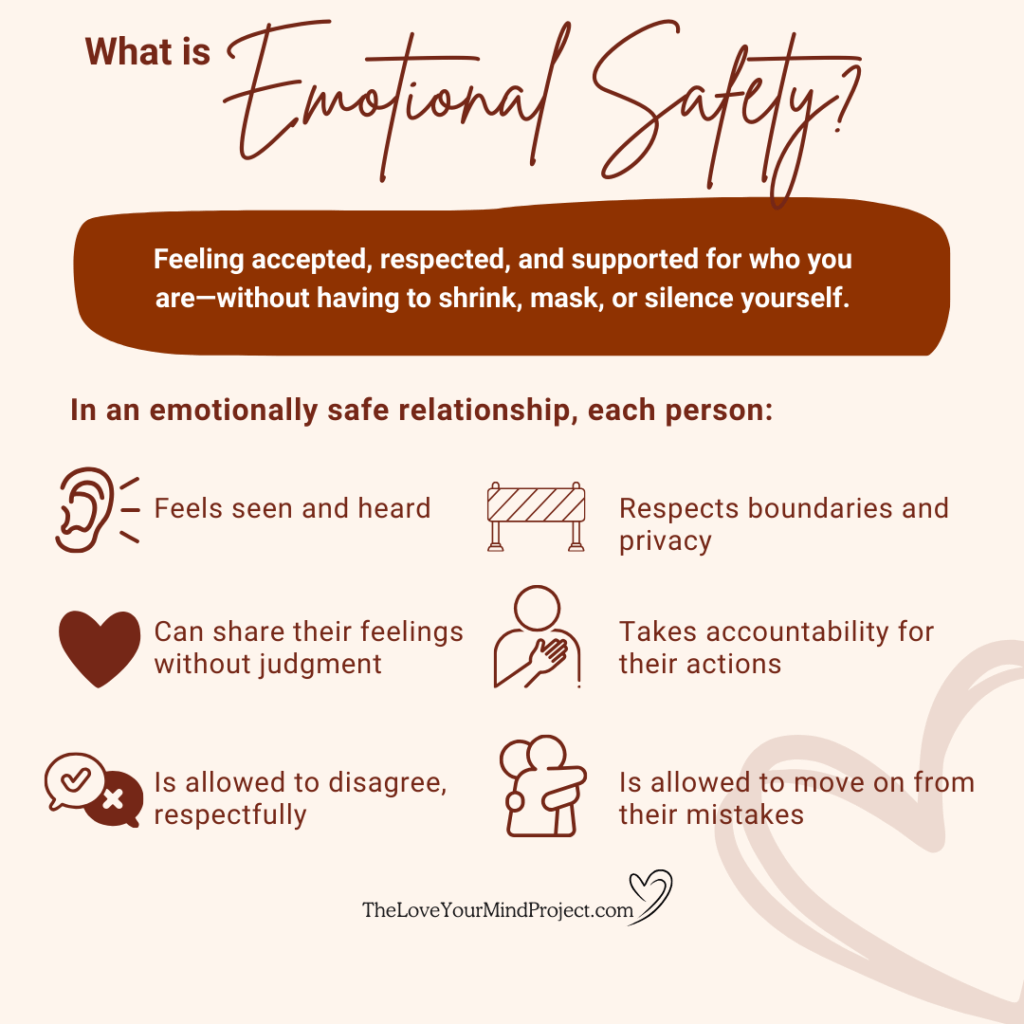
Signs you’re in an emotionally safe relationship
- You both feel seen and heard.
- There’s trust and respect.
- Boundaries, privacy, and autonomy are accepted.
- There’s room to share feelings without judgment or disproportionate reactions.
- Each person takes accountability for their actions.
- Respectful disagreement is okay.
- You can move past mistakes—neither person is “keeping a scorecard” or holding mishaps against the other.
Signs the relationship is not emotionally safe
- You’re afraid to disagree out of fear of being belittled or disrespected.
- You feel responsible for the other’s happiness.
- Conversations often turn defensive.
- One person’s perspective or feelings are dismissed or ignored.
- There’s little trust and a lot of suspicion and accusations.
- Emotions are often judged or criticized.
This isn’t something that’s a nice-to-have—emotional safety is essential. Without it, the relationship can feel like a performance, where you’re constantly masking your needs or walking on eggshells to keep the peace.3
>> Want weekly encouragement in your inbox? Subscribe!
What to do if you don’t feel emotionally safe
Noticing the signs may be painful, but it’s also the first step toward progress. Here’s what you can do to establish more emotional safety for yourself.
Name and validate what you’re feeling
Before seeking validation from someone else, start with self-validation. Acknowledge that your emotions matter. Allow yourself to feel hurt, frustrated, angry, or disappointed without criticizing or minimizing your experiences.
Talk about it (if it feels safe)
If the relationship is important, and you believe they’re open to listening, you can try having a conversation about your needs. Consider using “I” statements to avoid placing blame. For example, “I feel unheard when my feelings are dismissed as overreacting.”
Set boundaries to protect your peace
Healthy relationships have boundaries. Those interactions where you’re constantly fighting for what you need may require a few more. You may need to limit time with people who drain you or steer clear of conversations that consistently cause harm. Boundaries aren’t to punish or control others—they protect your peace and progress.
Be a safe space for yourself first
Show yourself the support you desire from others. Speak to yourself with kindness and compassion, not criticism. Forgive yourself for past mistakes. Encourage yourself on those hard days. The more you create this safe space, the easier it’ll be to recognize when others are and aren’t able to provide the same.
>> MORE: The Black woman’s guide to loving your mind
Find more emotionally safe connections
If certain relationships don’t allow you to be vulnerable, then lean into those that do. Spend more time with friends, community groups, faith circles, or therapy spaces that support you and affirm your experiences.
You deserve relationships where you can be soft, vulnerable, and fully yourself. Emotional safety isn’t too much to ask—it’s the bare minimum.
Emotional safety FAQs
What is emotional safety in a relationship?
It’s the ability to express your true self without fear of rejection, ridicule, or harm. Emotional safety means both people feel respected, heard, and supported.
What is an example of emotional security?
One example is feeling free to admit when you’re struggling, knowing the other person won’t shame or dismiss you, but instead responds with care, patience, or understanding.
What ruins emotional safety?
Constant criticism, dismissing feelings, manipulation, betrayal, or ignoring boundaries can quickly destroy emotional safety—so can patterns of disrespect, invalidation, and lack of trust.
Can you rebuild emotional safety?
Yes, but it takes intentional effort, honesty, and accountability from everyone involved. Both of you should be willing to acknowledge what’s not working to rebuild a new, healthier foundation. Apologies are a start. But real change comes from consistent actions.
How do I create emotional safety for someone else?
Listen with empathy, validate their feelings, respect boundaries. Emotional safety grows when people know they can be their authentic selves with you.
References
- Who is an Emotionally Safe Person? (2025). Ucdenver.edu. https://www.ucdenver.edu/student/stories/library/healthy-happy-life/who-is-an-emotionally-safe-person ↩︎
- Woods-Giscombe, C., Robinson, M. N., Carthon, D., Devane-Johnson, S., & Corbie-Smith, G. (2016). Superwoman Schema, Stigma, Spirituality, and Culturally Sensitive Providers: Factors Influencing African American Women’s Use of Mental Health Services. Journal of Best Practices in Health Professions Diversity : Research, Education and Policy, 9(1), 1124. https://pmc.ncbi.nlm.nih.gov/articles/PMC7544187/ ↩︎
- Emotional Safety: What It Is and Why It’s Important. (2023). Psychology Today. https://www.psychologytoday.com/us/blog/the-art-of-feeling/202301/emotional-safety-what-it-is-and-why-its-important ↩︎