
It may start innocently enough. You open a social media app to kill time, decompress, or catch up on what your friends are up to.
Before you know it, you’re sucked into heavy headlines, political extremism, rage bait, and just unnecessary comment threads.
Doomscrolling can steal your joy, optimism, peace, and sense of safety. So why does putting down the phone not only feel impossible, but irresponsible?
There’s a reason you might feel stuck in a negative news loop. It’s less about willpower, emotional sensitivity, or your level of faith—and more about how the brain is wired.
What is doomscrolling?
Doomscrolling is the habit of constantly scrolling through upsetting content on social media, news sites, or other digital platforms, even when it leaves you feeling horrible.
The term became common during the pandemic, when many of us were stuck at home trying to stay up to date on what was happening around us. News feeds updated us regularly on symptoms, treatments, and U.S. death tolls, unlike anything most of us have witnessed in our lifetime.1
The “shelter in place” orders are long gone. Yet, for many of us, doomscrolling remains. Here’s why.
How doomscrolling harms your mental health
Studies have linked doomscrolling to anxiety, depression, and psychological distress.2
Some research shows that women might be more vulnerable to its effects since we tend to experience higher rates of anxiety and depression compared to men.3
Exposure to racialized content, like videos of police violence, can contribute to trauma, grief, and hopelessness—making doomscrolling even heavier for Black women.4
Researchers are still studying the long-term effects of doomscrolling on our mental health. But what’s clear is that excessive exposure to negative news can erode our emotional well-being.
Why it’s so hard to stop
Doomscrolling taps into our fundamental need to feel safe.
A horrific headline stops you mid-scroll. You want to know more, hoping you can prevent something similar from happening to you.
Psychologists call it negativity bias. We don’t enjoy bad news—our brains prioritize it for our survival.5
For many Black women, this draw to negative news can be intensified by hypervigilance. Past experiences with trauma, emotional pain, bias, and disappointment can leave us constantly on alert for perceived threats or danger.
Media platforms, designed for engagement, tend to exploit this.
Algorithms ensure that the more you engage with fear- or anger-invoking content, the more of it you’ll see. But the more bad news you consume, the more you’ll scroll for answers, relief, or some level of reassurance.
This is how doomscrolling can fuel a vicious habit of consuming distressing content to feel less distressed. And it’s a cycle that’s difficult to break with willpower alone.
How to stop doomscrolling
Doomscrolling is a habit that you can unlearn with self-awareness, healthy boundaries, and patience. Here are a few strategies to try.
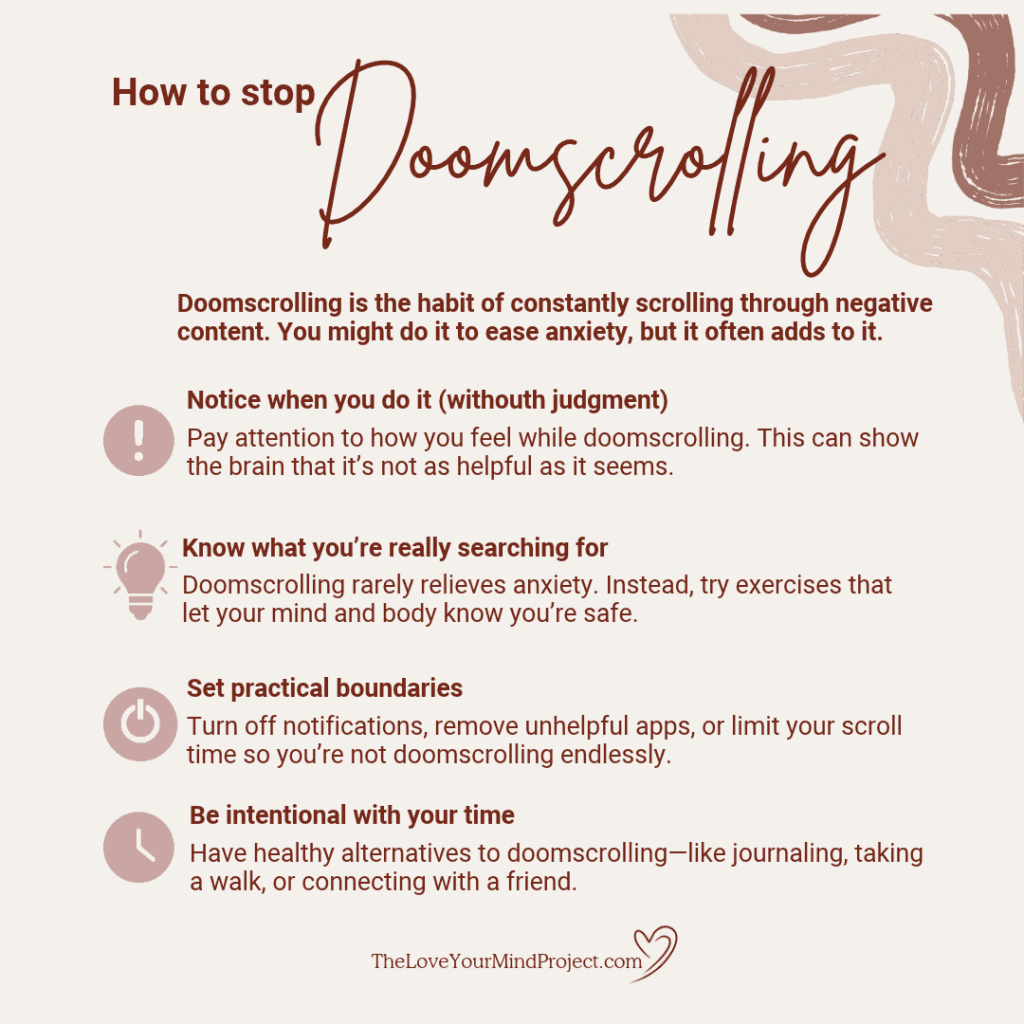
Notice when you’re doomscrolling (without judgment)
Habits thrive when we operate on autopilot. As noted by Dr. Jud Brewer, psychiatrist, neuroscientist, and thought leader in habit change, you can’t change what you can’t see.
So an important step in breaking the doomscrolling cycle is to simply notice that you’re doing it. As with other mindfulness exercises, the key is to do this without judgment and without trying to “fix” yourself.
Try to notice the details—what triggered the scrolling and what emotions or sensations arise as you view the content.
According to Dr. Brewer’s research, paying attention to how your body feels while doomscrolling can help your brain recognize what you’re actually getting from the habit (often anxiety), rather than what you’re hoping to gain (safety and reassurance).5
Reflect on what you’re really searching for
Doomscrolling is often driven by anxiety. The brain attempts to gather as much information as possible to keep you safe. But more news (especially negative content) rarely relieves anxiety.5
What you’re really looking for might be reassurance.
So when you’re doomscrolling and feeling tense, stressed, and hypervigilant, try a few exercises that help signal safety—meaning they calm your heart rate and relax your breathing.
It can be as simple as a few breathing exercises or grounding techniques that help you focus on what’s around you.
Set practical media consumption boundaries
Setting limits on how much negative content you consume could help you cut down on mindless doomscrolling.
You can start small with changes like turning off app notifications, unfollowing certain media outlets, or setting a time limit for how long you scroll.
If you want to go a bit further, consider taking longer breaks from social media, unsubscribing from daily news, or deleting apps that trigger anxiety and encourage doomscrolling.
Be more intentional with your time
Whether you scroll out of boredom, hypervigilance, or on autopilot, it helps to have healthier alternatives.
If you tend to reach for your phone first thing in the morning, try beginning the day with a gratitude journal entry. Or if you doomscroll on your lunch break, consider a brief walk around the block or office instead. If you’re itching to doomscroll before bed, try gentle stretches to release tension and calm the body.
By deliberately spending more time on activities that encourage, uplift, or simply let you let go, you can lessen your chances of doomscrolling.
When to seek professional support
Doomscrolling may not be as helpful as you think. It can add to the stress you’re already carrying—caregiving responsibilities, work pressures, and simply navigating life as a Black woman.
If doomscrolling, fear, or anxiety is getting in the way of your daily life, it’s okay to seek support. Culturally affirming therapy can help you process anger, fear, worry, and other difficult emotions you may experience.
You’ve spent years scanning for threats and preparing for the worst. You deserve more spaces where you feel safe and at peace.
How to stop doomscrolling FAQs
How unhealthy is doomscrolling?
Constantly consuming negative content can add stress and contribute to anxiety, emotional exhaustion, and feelings of hopelessness. And chronic stress doesn’t just impact our emotional well-being—it can harm our physical health, too.6
Is doomscrolling a form of anxiety?
Doomscrolling isn’t a clinical anxiety disorder, but the two can be connected. Anxiety might drive you to seek more information to feel safe or prepared—but the content can leave you feeling more anxious. Over time, doomscrolling can fuel a cycle of worry and compulsive scrolling.
What should you do instead of doomscrolling?
Start by noticing when and why you doomscroll. That creates space to replace doomscrolling with activities that help you feel calm, connected, or more present. You might try taking a short walk, journaling, or spending time with someone you enjoy connecting with.
References
Last accessed November 2026
- Roos, D. (2025, May 28). The deadliest events in US history. HISTORY. https://www.history.com/articles/deadliest-events-united-states ↩︎
- Li, Q., & Yin, X. (2026). Doomscrolling, mental health, and psychological well-being in adolescents and adults: A systematic review and meta-analysis. Frontiers in Psychology, 17, Article 1893800. https://doi.org/10.3389/fpsyg.2026.1893800 ↩︎
- Ghouri, S. (2026). Impact of doomscrolling on stress, emotional distress, and anhedonia among women aged 20–59: A cross-sectional survey. Journal of Behavioral and Cognitive Therapy, 36(3), Article 100604. https://doi.org/10.1016/j.jbct.2026.100604 ↩︎
- Sims, G., Kia-Keating, M., & Hal, O. D. (2026). Racial trauma and resilience in the aftermath of media exposure of fatal police violence toward Black Americans: Consequences and collective burden. Cultural Diversity and Ethnic Minority Psychology, 32(2), 216–225. https://doi.org/10.1037/cdp0000730 ↩︎
- Brewer, J. (2026, February 10). How to break a doom scrolling habit (the neuroscience behind the urge). Dr. Jud. https://drjud.com/how-to-stop-doom-scrolling/ ↩︎
- American Psychological Association. (2023, March 8). Stress effects on the body. https://www.apa.org/topics/stress/body ↩︎

- How to stop doomscrolling (and why it feels impossible) - November 21, 2026
- Political anxiety is real—How Black women can cope - November 13, 2026
- Politics and mental health: How it can harm our well-being - November 5, 2026