

Chronic fatigue is real, but can be hard to pinpoint. Understanding its common causes can help you find answers and, ultimately, the best ways to recover.

Some of us are tired by default.
You may wake up tired. Feel exhausted after work. Drained after dinner. And just done by bedtime.
No matter how much you rest, it just doesn’t seem to lift.
If weeks or even months have passed and you still feel depleted, you could be dealing with chronic fatigue.
So let’s explore chronic fatigue—including what it is and possible causes, so you can better understand what your body may need.
What's in this article?
Is chronic fatigue real?
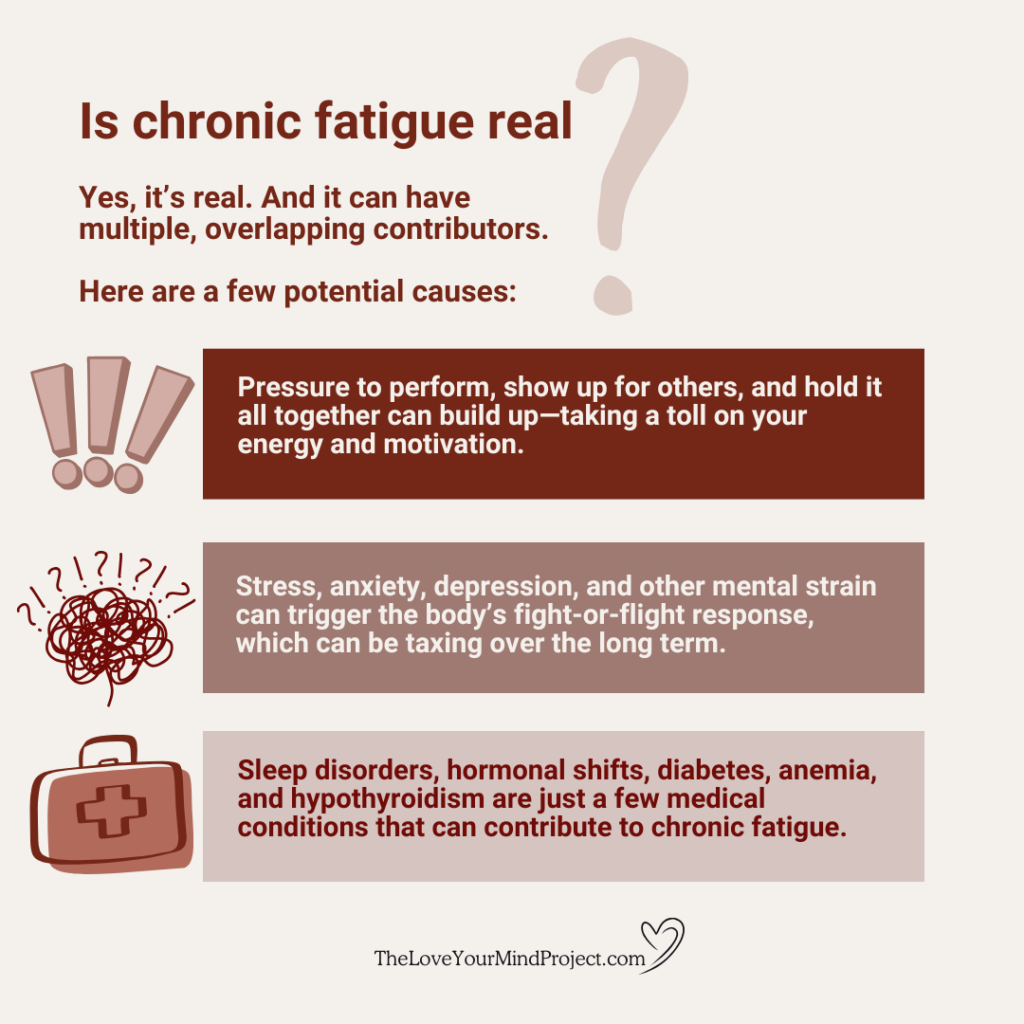
Yes, chronic fatigue is real.
It’s an umbrella term often used to describe tiredness that lasts six months or more and doesn’t improve with rest, balanced nutrition, exercise, or other lifestyle changes.
But it’s not always easy to pinpoint.
Persistent exhaustion can have multiple, overlapping causes and may not always show up in standard medical tests.1 That means your vitals can look “normal,” and lab work may come back “fine.”
All of this can make it feel like it’s all in your head—when it’s not.
Chronic fatigue can make it difficult to function, focus, or feel like yourself. And this can feel unbearably heavy for Black women already juggling multiple responsibilities, pressures, and expectations.
So if you constantly feel worn out, it deserves your attention.
How chronic fatigue can show up
Chronic fatigue can affect your whole self—physically, mentally, and emotionally.
Everyone’s experience is unique, but you might notice:
- You’re tired even after getting “enough” sleep
- Feeling constantly drained of energy throughout the day
- Everyday tasks feel burdensome—even those you once enjoyed
- Brain fog, trouble concentrating, or decision fatigue
- Increased irritability or feeling more sensitive to stress
- Feeling emotionally flat or like you have less emotional capacity
Everyone has moments or even seasons of exhaustion. But when it lingers, it’s worth exploring possible causes so your body can get the restoration it needs.
What causes chronic fatigue?
Ongoing fatigue can be connected to mental or emotional strain, sleep challenges, lifestyle demands, underlying medical conditions, or a combination of factors. Here are just a few examples of its causes.
The weight of life’s responsibilities
The emotional demands you deal with daily can subtly fuel chronic fatigue.
Pressure to show up for others, care for your household, perform at work, and maintain relationships can build over time.
Without adequate support of your own or a space to lay down what you’re carrying, your system can become overwhelmed. And over time, it can take a toll on your energy, motivation, and capacity to handle more.
This kind of fatigue isn’t always fixed by more sleep, time off, or supplements. That’s because the root isn’t just physical—it’s emotional depletion.
Mental strain and overload
Constant worry, racing thoughts, or a persistent low mood don’t just stay in your head—they can affect your body and contribute to fatigue.
Anxiety, depression, and stress can trigger the body’s fight-or-flight response, increasing your heart rate, tightening your muscles, and influencing other reactions that make it difficult to rest or recover.2
Without enough moments where your body feels safe to relax and let go, your system can stay stuck in this survival mode.
Even if everything looks “fine” on the outside, your mind and body could be working overtime on the inside. And when this becomes your norm, it can leave you feeling drained and worn out.
Physical and medical contributors
Sometimes, underlying physiological or medical conditions are behind chronic fatigue.
But don’t stress—this doesn’t necessarily mean something is seriously wrong. It may, however, point you in the right direction so you can better understand and address your exhaustion.
Common contributors might include:
- Sleep disorders, like insomnia, sleep apnea, or restless leg syndrome
- Hormonal shifts, including those during menstrual cycles, pregnancy, or menopause
- Nutrient deficiencies, like iron (anemia), vitamin B12, vitamin D, or magnesium
- Conditions like hypothyroidism, diabetes, and other metabolic disorders
- Certain medications or treatments3
If your fatigue persists, it’s worth a conversation with your doctor.
Advocating for yourself, sharing your experiences, asking questions, and requesting testing if needed can help you get closer to answers.
Why chronic fatigue is so easy to overlook
Life doesn’t slow down because you’re tired.
People still need you. Responsibilities are still there. And the bills are still due.
So you push through the exhaustion because it might feel like your only option—because things need to get done.
In our culture, rest is often treated like a luxury—or worse, a reward. But in reality, it’s a basic human need. It’s not just a foundation for mental and physical health, but also for peace, joy, and overall quality of life.
And the truth is—you deserve more than to simply function, get by, or survive.
Chronic fatigue may be your body sending a message. And it’s okay to listen and give yourself what you need to recover.
When it may be something deeper
In some cases, persistent exhaustion may be related to chronic fatigue syndrome, also called Myalgic Encephalomyelitis (ME/CFS).
ME/CFS is not the same as general chronic fatigue. It’s a complex medical condition that involves severe, long-term exhaustion that doesn’t improve with rest and may even worsen after physical or mental activity.4
If your fatigue doesn’t go away or begins to interfere with your daily life, consider talking with your doctor to explore what’s going on together.
Is chronic fatigue a real thing? FAQs
Is chronic fatigue the same as burnout?
Not exactly. Burnout is usually tied to prolonged stress—often from work, caregiving, or other demanding responsibilities. If left unaddressed, burnout can contribute to chronic fatigue. But the label matters less than understanding your symptoms and addressing the root cause.
Does chronic fatigue go away?
Chronic fatigue can improve when the underlying cause is addressed. If it’s linked to emotional depletion, sleep alone may not be enough. Or if it’s tied to a medical condition, the fatigue might improve with the appropriate treatment.
What is the best treatment for chronic fatigue?
There isn’t one universal treatment for chronic fatigue. The best approach is to address what’s causing it—whether that’s stress, sleep issues, anxiety, depression, or underlying medical conditions.
What is chronic fatigue syndrome?
Chronic fatigue syndrome (ME/CFS) is a medical condition that involves severe, long-term fatigue that doesn’t get better with rest. Someone with ME/CFS may find that their exhaustion worsens even after minor activity. They might also experience difficulty thinking or concentrating.
References
Last accessed March 2026
- (2023, September 8). Fatigue: Causes & Treatment. Cleveland Clinic. https://my.clevelandclinic.org/health/symptoms/21206-fatigue ↩︎
- Chu, B., Marwaha, K., Sanvictores, T., Awosika, A. O., & Ayers, D. (2024, May 7). Physiology, Stress Reaction. Nih.gov; StatPearls Publishing. https://www.ncbi.nlm.nih.gov/books/NBK541120/ ↩︎
- Fatigue Causes. (2025). Mayo Clinic. https://www.mayoclinic.org/symptoms/fatigue/basics/causes/sym-20050894 ↩︎
- Centers for Disease Control. (2024, September 18). ME/CFS Basics. Myalgic Encephalomyelitis/Chronic Fatigue Syndrome. https://www.cdc.gov/me-cfs/about/index.html ↩︎